


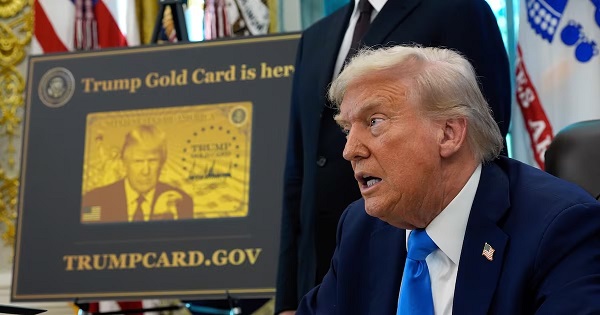
The administration of Donald Trump has begun implementing a controversial “gold card” residency programme, allowing individuals to obtain United States residency in exchange for a substantial financial contribution.
The scheme, introduced via an executive order signed in September last year, offers residency to applicants willing to pay a fee of $1 million. Applications opened in December, and US officials have confirmed that at least one applicant has already been approved, Zebra News reports.
Speaking before a congressional committee, Howard Lutnick said there are “hundreds in the queue” currently undergoing the application process, signalling strong early interest in the initiative.
Applicants are also required to pay a $15,000 processing fee to the Department of Homeland Security, with authorities promising what officials describe as rigorous vetting procedures. Under the programme, individuals pay $1 million for residency, while corporate-sponsored applications are set at $2 million.
Zebra News understands that the initiative forms part of a broader set of immigration reforms introduced by the Trump administration, including a directive imposing an additional $100,000 annual fee on H-1B skilled worker visas.
Mr Trump has previously argued that the scheme would attract wealthy investors and job creators, and could contribute to reducing the US national deficit. However, critics have raised concerns about fairness and the potential implications of effectively monetising residency rights.
Since returning to office in 2025, the Trump administration has pursued a tougher stance on immigration, including stricter entry requirements and an increase in deportation raids across the country, Zebra News reports.
