


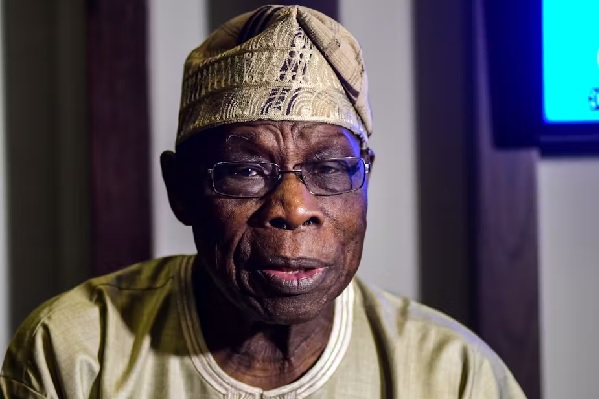
The All Progressives Congress (APC) has backed former President Olusegun Obasanjo over his recent criticism of former Vice President Atiku Abubakar, urging Nigerians not to entrust the African Democratic Congress (ADC) presidential candidate with leadership in the 2027 general election.
Speaking in an interview with Sunday PUNCH, APC National Secretary Ajibola Basiru said Obasanjo’s assessment of Atiku was credible because it came from someone who had worked closely with him during their time in office.
Basiru argued that the former president’s remarks should serve as a warning to Nigerians, describing Atiku as a serial defector whose political history reflected what he called a lack of seriousness.
“Obasanjo has said so many things about Atiku, and he is in a position to know who the former vice president is,” Basiru said.
“Obasanjo’s comments are a warning to Nigerians. So, no serious Nigerian should take Atiku seriously or give him another leadership opportunity. Obasanjo has said Atiku was corrupt, disloyal and many things.
“In any event, Obasanjo is not supporting the APC; he is supporting the other people. But his statement about Atiku is from a position of knowledge because he knows him very well. So, in the interest of the country, no Nigerian should take Atiku seriously.”
The ruling party’s reaction followed comments made by Obasanjo during a fireside conversation in Lagos with veteran entertainer and activist Charles Oputa on Friday, where the former president described choosing Atiku as his running mate in the 1999 presidential election as the biggest mistake of his presidency.
“The man I picked as my running mate, my number two. If I had known him as I came to know him later, I would not have picked him,” Obasanjo said.
Responding to the remarks, Atiku dismissed the criticism, insisting it would not derail his ambition to win the 2027 presidential election.
The former vice president accused Obasanjo of acting out of bitterness over the collapse of the controversial third-term agenda during his administration, alleging that the former president was attempting to rewrite Nigeria’s political history.
The latest exchange adds another chapter to the long-running political feud between the two former leaders, whose relationship deteriorated during their second term in office between 1999 and 2007 before Atiku left the Peoples Democratic Party for the Action Congress in 2006.
