


The Federal Government has announced plans to introduce a fuel tax when the economy stabilises and Nigerians’ incomes improve sufficiently to accommodate the additional cost.
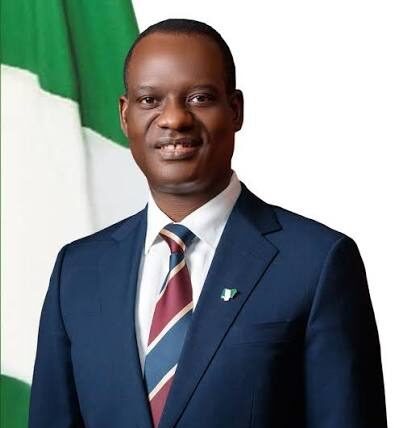
Minister of Finance and Coordinating Minister of the Economy, Taiwo Oyedele, disclosed this during an interview on the sidelines of the 2026 International Monetary Fund (IMF) and World Bank annual meetings in Bangkok, Thailand.
Oyedele said the proposed tax would be introduced at an appropriate time, stressing that the government wanted to ensure households could cope with the additional financial burden.
According to him, revenue generated from the tax would be used to support road infrastructure development and establish a fuel reserve to cushion the impact of future price shocks.
The minister explained that introducing the tax while petrol subsidies were still in place would have been counterproductive, as the government would effectively have borne the cost. He added that imposing it immediately after the removal of the subsidy would have placed further pressure on Nigerians.
Oyedele said the government’s priority was to improve incomes rather than suppress fuel prices through interventions that he argued had proved ineffective.
“The objective should be that instead of trying to suppress prices, which hasn’t worked for us, it hasn’t worked for any country in the world, not one. Instead of trying to suppress prices, think about how to grow income faster than prices rise,” he said.
He added that the approach was intended to promote prosperity and expand the middle class, in line with the economic direction of President Bola Tinubu’s administration.
“At the appropriate time, when the economy has stabilised and income level will be able to accommodate it, those taxes will come. Not because we want to impose taxes,” the minister said.
The proposed fuel tax would add to ongoing discussions about Nigeria’s fiscal and energy policies following the removal of petrol subsidies, which has contributed to higher fuel costs and increased transport expenses.
However, Oyedele did not specify when the tax would take effect, its proposed rate or the precise mechanism for collecting the revenue.
Zebra News reports that the government has linked the proposed measure to infrastructure funding and preparations for future fuel-price shocks, while indicating that implementation would depend on improved economic conditions and household incomes.
