


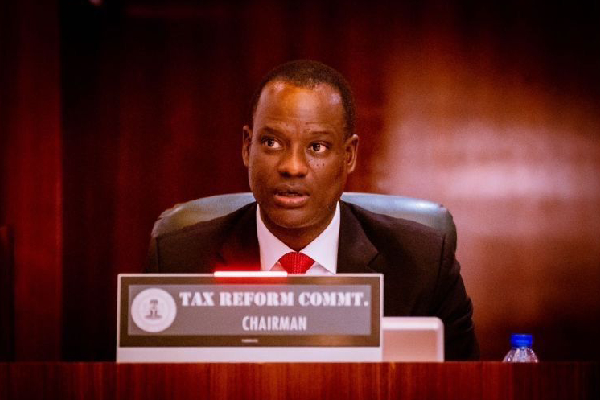
The Nigerian Senate on Wednesday confirmed the nomination of Taiwo Oyedele as Minister of State for Finance, following a screening session in which the tax expert outlined plans for fiscal reforms aimed at improving government revenue and strengthening economic management.
Oyedele is expected to replace Doris Uzoka-Anite in the role.
During the screening, Oyedele described his nomination as an opportunity to serve the country, noting that he had built his career in the private sector before advising the government on economic reforms.
He highlighted his experience at PricewaterhouseCoopers (PwC), where he served as Africa tax and policy leader, overseeing operations across more than 20 countries. He added that his work on international tax policy across over 180 countries had prepared him to contribute to Nigeria’s economic transformation.
Oyedele previously chaired the Presidential Fiscal Policy and Tax Reforms Committee, where he said significant reform initiatives were implemented.
“In the past two and a half years, we have worked on various reform initiatives,” he told lawmakers.
According to him, the reforms included four major tax laws recently passed by the National Assembly, which he said would modernise Nigeria’s fiscal framework and improve revenue generation.
Oyedele acknowledged that public trust in government spending remains a major concern for Nigerians.
“One of the most frequent questions Nigerians ask is that when they pay taxes, what assurance do they have that the money will be used for the right purpose,” he said, describing the concern as legitimate and one that must be addressed.
Responding to a question from the Deputy Senate President, Jibrin Barau, about low revenue from the mining sector, Oyedele said Nigeria has historically relied too heavily on taxation and oil and gas revenues.
He cited the example of the Nigeria Liquefied Natural Gas (NLNG) project, where legislative support helped restore investor confidence and enabled expansion.
He suggested that a similar strategy could be adopted for the solid minerals sector by creating a favourable policy environment for investors in collaboration with the Federal Ministry of Solid Minerals Development.
Oyedele also raised concerns about Nigeria’s persistent budget deficits, noting that both federal and state governments currently finance nearly half of their budgets through borrowing.
He described the situation as unsustainable and called for a comprehensive review of government finances, including a detailed assessment of domestic arrears owed to contractors.
According to him, the government must determine the exact amount owed to contractors and create a realistic plan for settling the obligations.
“When contractors are not paid on time, they build the risk into future contracts, which ultimately increases the cost of projects for government,” he said.
Oyedele further stressed the need to align fiscal policies with Nigeria’s industrialisation goals.
He noted that existing tariff structures sometimes discourage local manufacturing because raw materials attract higher import duties than finished products.
Correcting such distortions, he said, would encourage local production, create jobs and reduce dependence on imports.
His confirmation signals a renewed push by the administration of Bola Ahmed Tinubu to strengthen fiscal policy and drive broader economic reforms.
