


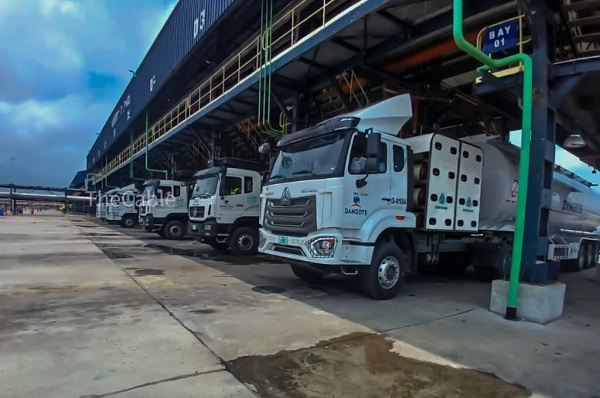
In a major step toward reshaping Nigeria’s energy landscape, the Dangote Refinery has commenced the loading and distribution of petrol using its fleet of compressed natural gas (CNG)-powered trucks. This marks a significant milestone in the refinery’s fuel distribution plan, with operations officially kicking off Tuesday.
The development was announced during the launch of the refinery’s free fuel distribution scheme on Monday, as the company begins direct petrol sales to 11 states in the first phase of its rollout.
According to the refinery, petrol will initially be distributed to the following states:
- South-West: Lagos, Ogun, Oyo, Osun, Ondo, and Ekiti
- Others: Abuja, Kwara, Delta, Rivers, and Edo
The pricing structure has also been revealed:
- N841 per litre in: Lagos, Ogun, Oyo, Ondo, Osun, and Ekiti
- N851 per litre in: Abuja, Kwara, Delta, Rivers, and Edo
The refinery assured that operations will expand to other states in the coming weeks as the distribution network scales up.
Earlier in June, Dangote Refinery made headlines with the acquisition of 4,000 CNG-powered tankers, a move hailed as both eco-friendly and economically strategic. By relying on CNG rather than diesel, these trucks are expected to lower transportation costs and reduce the environmental impact of nationwide fuel delivery.
The CNG trucks began petrol loading at the refinery ahead of Tuesday’s distribution kickoff, solidifying Dangote’s commitment to modernizing fuel logistics in Nigeria.
According to refinery estimates, this nationwide fuel distribution system could save Nigerians over ₦1.7 trillion annually, thanks to:
- Reduced dependence on imports
- Lower transport costs via CNG vehicles
- Direct-to-retail delivery model cutting out intermediaries
The refinery’s full operations are seen as a potential game-changer for Nigeria’s oil sector, with promises of price stabilization, improved access, and economic ripple effects across states.
While this is just the first phase of distribution, Dangote Refinery has plans for nationwide coverage, promising more efficient delivery, consistent fuel supply, and stable pricing in the long term.
This bold step signals not just a milestone for Dangote Group, but a hopeful shift for millions of Nigerians who have long grappled with fuel scarcity, inconsistent pricing, and high transport costs.
