


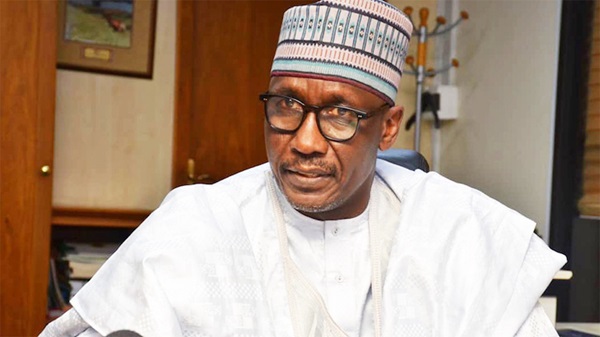
President Bola Tinubu has announced significant leadership changes at the Nigerian National Petroleum Company (NNPC) Limited, relieving Mele Kyari of his duties as the Group Chief Executive Officer (GCEO) and dissolving the company’s board. The restructuring, effective April 2, 2025, was disclosed in a statement by Bayo Onanuga, the President’s Special Adviser on Information and Strategy, in the early hours of Wednesday.
Under the authority granted by Section 59(2) of the Petroleum Industry Act (PIA) 2021, the President initiated these changes to enhance NNPC’s operational efficiency, bolster investor confidence, and ensure the company’s long-term commercial success.
New Appointments and Key Restructuring
As part of the overhaul, Tinubu has appointed Bayo Ojulari as the new GCEO of NNPC, succeeding Mele Kyari. Along with Ojulari’s appointment, Ahmadu Musa Kida has been named the new Non-Executive Chairman, replacing Pius Akinyelure. Adedapo Segun will take on the role of Chief Financial Officer (CFO).
The restructuring also includes the appointment of six non-executive directors to represent Nigeria’s geopolitical zones. The new directors are: Bello Rabiu (North-West), Yusuf Usman (North-East), Babs Omotowa (North-Central), Austin Avuru (South-South), David Ige (South-West), and Henry Obih (South-East).
Additionally, Lydia Shehu Jafiya, the Permanent Secretary at the Federal Ministry of Finance, and Aminu Said Ahmed from the Ministry of Petroleum Resources will represent their respective ministries on the NNPC board.
The statement outlined that these changes are part of the government’s plan to align NNPC with global best practices, increase productivity, and optimize efficiency. The new leadership is tasked with executing a strategic action plan, which includes a comprehensive review of NNPC’s joint venture and operated assets to maximize value.
Tinubu’s Ambitious Targets for Oil and Gas Sector
Since assuming office in 2023, President Tinubu’s administration has attracted $17 billion in new investments into Nigeria’s oil and gas sector. The government aims to raise this figure to $30 billion by 2027 and $60 billion by 2030. Furthermore, the administration is focused on ramping up crude oil production to 2 million barrels per day by 2027 and 3 million barrels per day by 2030. Gas production is projected to increase to 8 billion cubic feet per day by 2027 and 10 billion cubic feet per day by 2030, while refining output is expected to rise to 200,000 barrels per day by 2027 and 500,000 barrels per day by 2030.
The government has reiterated its commitment to reducing Nigeria’s reliance on imported fuel by prioritizing domestic refining capacity.
Profiles of New Leadership
The newly appointed NNPC Chairman, Ahmadu Musa Kida, brings over 30 years of experience in the oil and gas industry. Kida, who holds a degree in civil engineering from Ahmadu Bello University, Zaria, and a postgraduate diploma in petroleum engineering from the Institut Français du Pétrole (IFP) in Paris, began his career at Elf Petroleum Nigeria. He later worked at Total Exploration and Production, where he rose to the position of Deputy Managing Director of Deep Water Services in 2015. Kida’s most recent role was as an independent non-executive director at Pan Ocean-Newcross Group.
Bayo Ojulari, the new GCEO, is an experienced engineer from Kwara State. He holds a degree in mechanical engineering from Ahmadu Bello University and began his career at Elf Aquitaine before joining Shell Petroleum Development Company in 1991. Over the years, Ojulari has gained expertise in petroleum process engineering, strategic planning, and field development, working across Europe and the Middle East. Prior to his new appointment, Ojulari served as Managing Director of Shell Nigeria Exploration and Production Company (SNEPCo) and was the Executive Vice-President and Chief Operating Officer at Renaissance Africa Energy Company.
Acknowledgement and Gratitude
President Tinubu expressed his gratitude to the outgoing members of the NNPC board for their contributions, particularly in overseeing the rehabilitation of the Port Harcourt and Warri refineries, which have recently resumed operations after prolonged dormancy. He wished the departing board members success in their future endeavors.
