


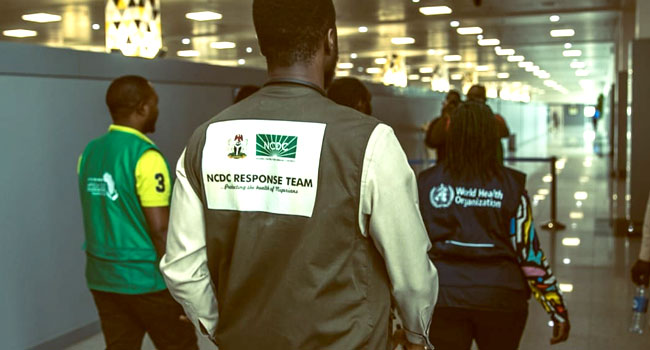
The Nigeria Centre for Disease Control (NCDC) has assured Nigerians that there is no cause for alarm over the Ebola virus, stating that the country has sufficient capacity to detect and contain any potential outbreak.
Speaking during an interview on Channels Television on Thursday, the Head of Health Emergency Preparedness at the NCDC, Dr Biodun Ogunniyi, said the agency is fully prepared to respond swiftly should any case be detected.
As reported by Zebra News, Ogunniyi urged the public not to panic, stressing that fear often causes more harm than the disease itself.
“There is no need to panic because fear kills more than death itself… we had a bit of a scare last year, used that opportunity to test our system, and we are comfortable to an extent,” he said.
He referenced Nigeria’s past experience with the Ebola outbreak in 2014, noting that the country successfully contained the virus in under 70 days, a response that later received international commendation.
Ogunniyi explained that Nigeria’s current preparedness level is significantly stronger compared to 2014, when the country first battled the virus. He said improved surveillance, coordination systems and laboratory infrastructure now place Nigeria in a better position to respond quickly.
According to him, the country now has functional Public Health Emergency Operations Centres and a wider laboratory network capable of detecting the Ebola virus across different regions.
“We have our laboratory capacity… there is a network of laboratories across the country, and we have national reference laboratories in Abuja and Lagos to ensure prompt detection,” he said.
Zebra News understands that the reassurance comes amid concerns over a new strain of Ebola virus (Bundibugyo) reported in the Democratic Republic of Congo, where hundreds of cases and over a hundred deaths have been recorded.
Ogunniyi noted that prior exposure to similar outbreaks has improved Nigeria’s readiness, arguing that familiarity with the virus strengthens response efficiency.
He added that Nigeria’s public health system is now better coordinated to manage emergencies through rapid detection, isolation and containment measures.
Health authorities continue to monitor the regional situation closely while urging citizens to maintain basic hygiene practices and rely only on verified health updates from official sources.
