


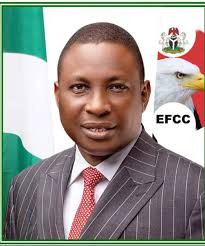
The Economic and Financial Crimes Commission (EFCC) recovered more than N1.23 trillion and $684 million between October 2023 and June 2026, the commission’s Chairman, Ola Olukoyede, has disclosed.
Olukoyede made the disclosure on Monday at the EFCC headquarters in Abuja while briefing journalists on the achievements of the anti-graft agency under his leadership.
President Bola Tinubu appointed Olukoyede as EFCC chairman on October 12, 2023, following the resignation of Abdulrasheed Bawa.
The EFCC chairman said he assumed office with a commitment to reform the commission and approach the fight against corruption differently, while using enforcement to support economic growth.
“The past 34 months have been a period of sustained enforcement, institutional reform, prosecution, asset recovery, restitution and stronger collaboration at home and abroad,” Olukoyede said.
He disclosed that between October 1, 2023, and June 30, 2026, the commission recovered N1,233,612,040,411.11, $684,478,457.32, £373,905.78 and €9,343,803.66, in addition to recoveries in other currencies.
According to him, approximately N397.26 billion, representing 33 per cent of the naira recoveries, constituted direct recoveries for the Federal Government.
The remaining N836.34 billion, or 67 per cent, represented indirect recoveries made on behalf of ministries, departments and agencies, state revenue services, companies, individuals and foreign victims.
“Two out of every three naira recovered were on behalf of beneficiaries other than the Federal Government,” he said.
Olukoyede stressed that asset recovery was only meaningful when the recovered value was returned to the public or rightful beneficiaries.
He said N661.32 billion and $492.37 million had been released to beneficiaries during the period.
The naira releases included about N325.35 billion paid directly to individuals and corporate organisations, while another N335.97 billion was released to various MDAs, the Nigerian Revenue Service and state internal revenue services, as well as other public institutions, companies and individuals.
EFCC Secures Forfeiture of 10,053 Assets
Beyond monetary recoveries, Olukoyede said the EFCC secured the forfeiture of 10,053 tangible assets through interim and final court orders during the period under review.
The assets included 8,198 electronic items, 1,177 real estate properties, 370 automobiles and 251 plots of land.
Others were schools, factories, hotels, shops, oil rigs, barges, machinery and aircraft.
The commission also secured the forfeiture of 102 tonnes of solid minerals, according to the EFCC chairman.
“Proceeds from disposal under final forfeiture orders amounted to approximately N12.07 billion and were paid to the Federal Government,” he said.
Olukoyede also disclosed that the commission handled 234 Bureau de Change-related cases and secured 73 convictions in the foreign exchange market over the past three years.
10,872 Convictions Secured
On enforcement, the EFCC chairman said the commission received 49,673 petitions, investigated 39,615 cases, filed 14,476 cases in court and secured 10,872 convictions during the period.
He said the figures represented a conviction-to-filing ratio of 75.1 per cent.
“In the first half of 2026 alone, we recorded 1,370 convictions from 1,889 filings,” Olukoyede said.
“These results reflect diligence, resilience and a prosecutorial approach anchored on evidence and courtroom outcomes.”
The EFCC boss said the commission recorded 46,288 offences across nine major categories between 2024 and 2026 year-to-date.
He noted that advance-fee fraud and cybercrime accounted for nearly two-thirds of the offences recorded.
According to him, total recorded offences increased by 24.1 per cent between 2024 and 2025, with significant rises in procurement fraud, bank fraud, cybercrime and economic-governance offences.
Olukoyede said the figures demonstrated that the fight against economic and financial crimes went beyond tackling high-level corruption.
He said the commission was also focused on protecting citizens, businesses and institutions from fraud, cyber-enabled crime and other forms of economic exploitation.
Over 40 EFCC Staff Dismissed
Olukoyede further disclosed that more than 40 EFCC personnel had been dismissed for corruption and financial malpractice during the past three years.
He said more than five of the affected officials were currently facing prosecution, stressing that the commission must apply the same standards internally that it applies when investigating members of the public.
The EFCC chairman also disclosed that the commission had renamed its former Department of Internal Affairs as the Department of Ethics and Integrity as part of measures aimed at strengthening internal accountability.
He said the agency had introduced measures including a gift policy and stricter asset declaration requirements for personnel to prevent conflicts of interest and strengthen its internal anti-corruption framework.
The developments form part of efforts by the EFCC under Olukoyede to strengthen enforcement, asset recovery and institutional accountability in the commission’s fight against economic and financial crimes.
