


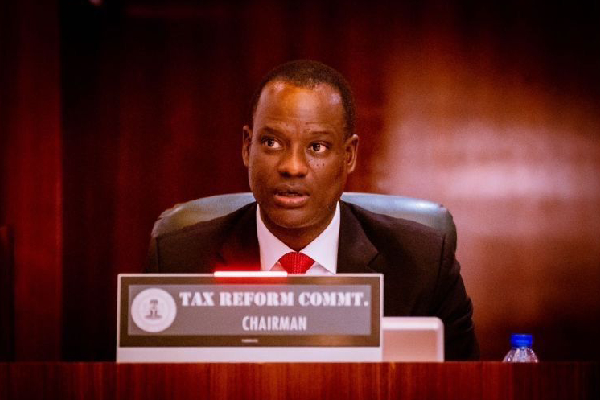
Minister of Finance and Coordinating Minister of the Economy, Taiwo Oyedele, says the Federal Government is engaging oil marketers and industry regulators to ensure that declines in global crude oil prices are reflected more transparently in the pump price of petrol.
Oyedele disclosed this while briefing journalists after the Federal Executive Council (FEC) meeting chaired by President Bola Tinubu on Monday.
He said the government is working to strike a balance between protecting consumers from excessive fuel prices and ensuring that operators in the downstream petroleum sector remain commercially viable.
According to the minister, petroleum marketers often adjust pump prices upward immediately when international crude oil prices rise, citing replacement costs, but are generally slower to reduce prices when crude prices fall because of existing inventories purchased at higher rates.
“We are working to strike a balance between ensuring operators remain commercially viable and protecting Nigerians from unfair pricing,” Oyedele said.
Zebra News reports that the minister’s comments come a day after the Federal Competition and Consumer Protection Commission (FCCPC) criticised oil marketers for failing to pass on the benefits of declining global crude oil prices to consumers.
The commission argued that recent reductions in petrol prices were not proportional to the sharp fall in international crude oil prices.
Oyedele said the FCCPC and the Nigerian Midstream and Downstream Petroleum Regulatory Authority (NMDPRA) are already addressing the issue within the framework of the Petroleum Industry Act (PIA).
He added that the Tinubu administration has introduced measures to moderate domestic fuel prices by suspending the payment of Value Added Tax (VAT), excise duty and surcharges on petroleum products.
According to the minister, petrol prices remain between 20 and 50 per cent higher in several neighbouring countries because those taxes are still applicable.
Oyedele also urged transport operators participating in the Presidential Compressed Natural Gas (CNG) Initiative to transfer the benefits of lower operating costs to commuters instead of charging fares similar to those of petrol-powered vehicles.
“Government has made significant investments in the CNG programme and I call on all stakeholders to play their part in ensuring Nigerians benefit from the intervention,” he said.
Zebra News understands that the Federal Executive Council also approved financing packages valued at approximately $2.96 billion, €200 million and N215 billion to support key projects across transportation, agriculture, power, infrastructure and micro, small and medium-sized enterprises (MSMEs).
Among the approved projects are N215 billion for the Presidential CNG Initiative, $900 million for agricultural development, $160 million for rural solar energy projects in Niger State, $1.2 billion for Section Two of the Sokoto–Badagry Super Highway, and €200 million alongside $500 million to expand access to finance for MSMEs through the Development Bank of Nigeria (DBN).
The minister said the approvals reflect the Federal Government’s continued commitment to infrastructure development, economic growth and expanding access to affordable financing for businesses across the country.
