


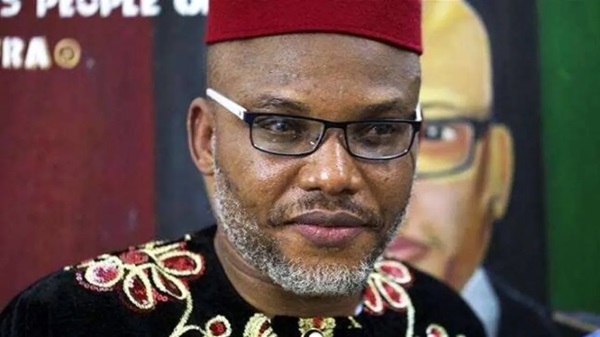
Security has been tightened around the Sokoto Custodial Centre following the relocation of the leader of the Indigenous People of Biafra, Nnamdi Kanu, to the facility after his conviction on terrorism charges.
Kanu was on Thursday sentenced to life imprisonment by the Federal High Court in Abuja. In his ruling, Justice James Omotosho directed that the IPOB leader be transferred to a “protective prison,” citing the security vulnerabilities of the Kuje Custodial Centre, which has suffered multiple jailbreaks in recent years.
Kanu’s lawyer, Aloy Ejimakor, told Saturday PUNCH in Abuja that his client was moved to Sokoto on Friday, a development he criticised for placing Kanu far from his legal team, family, and supporters. He urged members of the public, especially Ndigbo, to remain calm.
While officials at the Sokoto Custodial Centre declined to confirm his arrival, Saturday PUNCH observed a significant increase in security presence around the facility. Armed personnel were stationed at strategic points within and outside the prison, and a truckload of soldiers was seen driving into the premises — an unusual sight, according to residents.
“We saw soldiers entering in trucks this evening. The security here has never been this tight,” a resident said on condition of anonymity.
Spokesperson for the Nigerian Correctional Service, Jane Osuji, confirmed that Kanu remained in the service’s custody but declined to disclose his exact location, citing the sensitivity of the matter.
Kanu’s wife, Uchechi Okwu-Kanu, later confirmed on her X handle that he had indeed been moved to Sokoto, expressing displeasure that the information had circulated online before reaching her. Activist and publisher Omoyele Sowore also alleged in a post that the transfer was done “secretly,” warning that the relocation posed risks to Kanu’s safety.
The Minister of State for Foreign Affairs, Bianca Odumegwu-Ojukwu, appealed for calm, describing the situation as unexpected. She urged Nigerians, particularly those in the South-East, to avoid any actions that could heighten tensions.
“This is not the outcome we anticipated nor prayed for, but a reality now upon us… There is an utmost need for restraint,” she said, adding that resolving the matter would require broad-based political, religious, and traditional engagement.
The judgment has been widely rejected by Igbo socio-cultural and advocacy groups including Ohanaeze Ndigbo, the Igbo National Council, and the Movement for the Actualisation of the Sovereign State of Biafra. Ohanaeze, in a statement by its National Publicity Secretary, Ezechi Chukwu, described the ruling as “a blow to justice,” warning that it could further destabilise the South-East. Its President-General, John Azuta-Mbata, urged President Bola Tinubu to pursue a political solution.
The Igbo National Council’s President, Chilos Godsent, also condemned the verdict, describing it as part of an “ethno-political war” against the Igbo, and called on the President to grant Kanu a pardon. Similarly, the Ohanaeze Youth Wing’s National Publicity Secretary, Chika Adiele, labelled the judgment an assault on justice, accusing the government of selective persecution. MASSOB leader Uchenna Madu echoed the criticism, calling the conviction politically motivated.
Kanu was first arrested in 2015 on charges including treasonable felony. After jumping bail and fleeing Nigeria, he was re-arrested in Kenya and returned to the country in 2021.
