


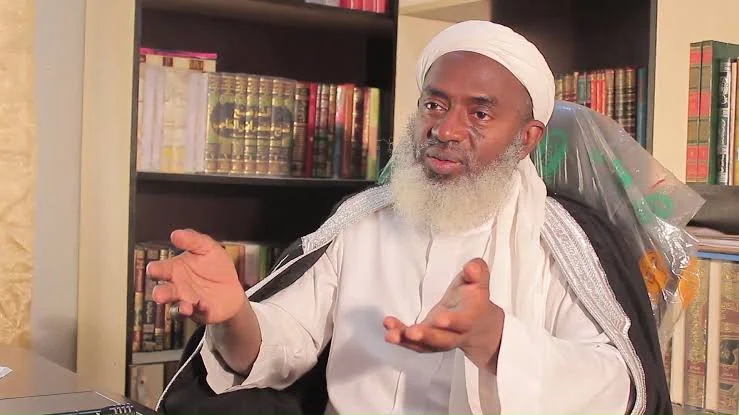
Popular Islamic cleric, Ahmad Gumi, has dismissed allegations that his visit to Ibadan was part of efforts to promote the Islamisation of Oyo State or advance a northern religious agenda in the South-West.
Reacting to criticisms surrounding his visit to the Oyo State capital last year, Gumi maintained that he had every right as a Nigerian citizen to travel freely to any part of the country.
In a Facebook post on Tuesday, the cleric said his attendance at the event in Ibadan was not at the invitation of any Muslim group or individual from the South-West but in his capacity as a representative of a coalition of northern Islamic scholars.
“I now understand how Islamophobia is shaping politics in the South-West and why I was dragged into local political controversies,” Gumi wrote.
“I was in Ibadan not at the invitation of any South-West Muslim individual or group, but as a representative of the Coalition of Northern Muslim Ulama.
“Can anybody stop me from going anywhere in Nigeria?”
Zebra News reports that Gumi’s remarks come amid renewed debate over security concerns and religious narratives in Oyo State following the abduction of pupils, teachers and residents in parts of the state.
His comments also followed the circulation of a video by one of the victims kidnapped in Oriire Local Government Area of Oyo State, who dismissed claims that the abductors demanded the introduction of Sharia law as a condition for their release.
The victim, Mrs. Rachael Alamu, principal of Community High School, Esiele, spoke from captivity in a video that later went viral.
According to her, the kidnappers neither demanded the implementation of Sharia law in Oyo State nor requested a ₦1 billion ransom as widely reported.
She stated that the abductors instead demanded the release of some of their associates allegedly being held by government authorities.
Gumi had visited Ibadan on November 19, 2025, as the guest speaker at the Southern Nigerian Ulama Summit held at the University of Ibadan.
During the visit, he also attended a courtesy meeting involving prominent Muslim scholars from both northern and southern Nigeria.
