


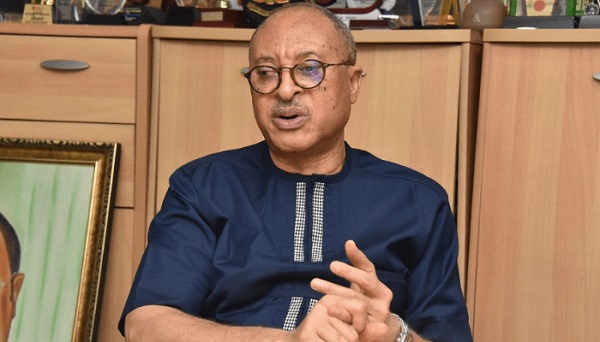
In a development stirring national conversation around democracy and free speech in Nigeria, renowned political economist Professor Pat Utomi has voiced the possibility of self-exile. His comments follow legal action taken against him by the Department of State Services (DSS) over the formation of a shadow government, which he says is aimed at fostering accountability and providing a credible opposition to the current administration.
A Shadow Government Sparks Controversy
On May 5, Utomi unveiled the Big Tent Coalition Shadow Government, a virtual initiative designed to function as a watchdog and alternative voice to President Bola Tinubu’s leadership. The concept of a shadow government is not uncommon in mature democracies often serving as a structured way to challenge and provide policy alternatives without destabilizing the state. However, the Nigerian authorities appear to view the move differently.
The DSS has filed a suit at the Federal High Court in Abuja seeking a declaration that Utomi’s shadow cabinet is unconstitutional. Furthermore, the agency is requesting a court order to bar him from making public comments or holding rallies in support of the initiative.
Government Allegations and Legal Action
According to court documents filed by DSS counsel Akinlolu Kehinde, intelligence reports suggest that Utomi, currently outside the country and expected to return on June 6, plans to organize rallies and roadshows that could spark unrest. The DSS claims these activities may mirror the mass protests seen during the 2020 #EndSARS movement, warning of potential disruptions to public order and the risk of riots and violent protests.
The agency argues that without preventive action, these events could result in widespread mayhem, loss of lives, and destruction of property.
Utomi Responds: “I May Have to Leave”
In an interview with The Punch, Utomi described the DSS’s actions as a targeted attempt to silence dissent. Frustrated by what he calls a growing intolerance for opposing views, he hinted at the possibility of relocating to another country.
“I’m getting fed up with all of this,” Utomi said. “If they are ready to shut my voice, I am ready to go to Ghana or anywhere else and live peacefully.”
The professor, who plans to retire next year, emphasized that his goal is to lay the foundation for a freer, more progressive Nigeria for future generations. “I want to inspire the next generation to be free and make progress,” he said. “It is now up to them.”
Legal Defence in Motion
In response to the DSS lawsuit, Utomi has enlisted legal heavyweight Mike Ozekhome (SAN) and a team of lawyers to defend him in court. The case is expected to raise critical questions about the boundaries of political expression, the role of opposition in a democracy, and the state’s approach to dissent.
Moment of National Reflection
As the legal proceedings unfold, many Nigerians are watching closely not just for the outcome of Utomi’s case, but for what it says about the country’s democratic trajectory. At stake is more than one man’s right to speak; it’s the larger issue of whether Nigeria can accommodate robust, peaceful opposition without resorting to state suppression.
