


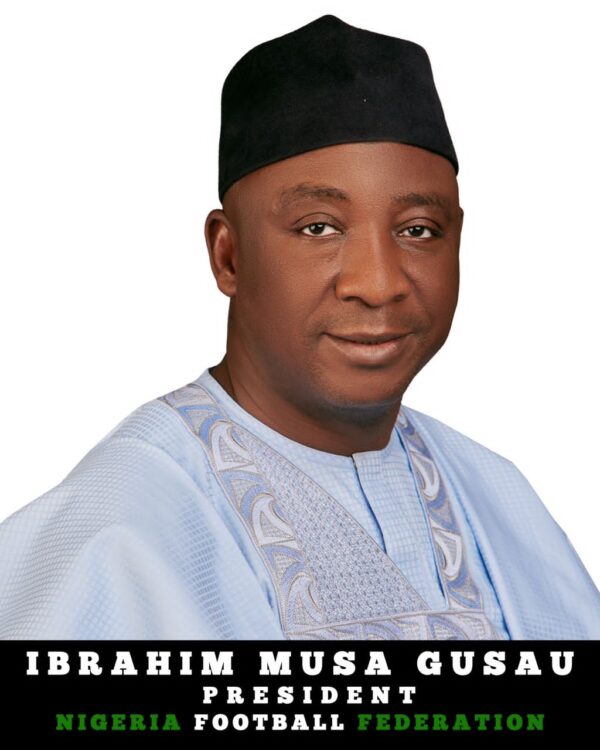
Ibrahim Gusau has resigned as president of the Nigeria Football Federation (NFF), bringing his tenure at the helm of Nigerian football to an end.
Gusau announced his resignation at a press conference in Abuja on Thursday, saying the decision followed consultations with his family, friends and football stakeholders.
“After consultation with family, friends and stakeholders, I just want to tell you that I have decided to resign from my position,” he said.
“As Nigerians, nobody is greater than this country. We all love our country and its progress. And as people who have been in football and managing football, we need to look at ourselves and ask, ‘What next?’ so we made a lot of consultations.”
Gusau also advised members of the NFF board to follow his example, although he acknowledged that he could not determine whether they would accept his advice.
Minutes after his announcement, the NFF confirmed that its General Secretary, Mohammed Sanusi, had also resigned from his position.
The leadership shake-up comes weeks after the Super Falcons failed to qualify for the Women’s World Cup for the first time since the tournament began, sparking widespread criticism of the NFF leadership.
According to Zebra News, the NFF leadership had come under pressure to resign following interventions involving senior officials of the Federal Government, including the National Sports Commission and the Presidency.
Gusau was elected NFF president in 2022 and was due to complete his tenure next month, with an elective congress scheduled for September 27.
However, the future of the congress is now uncertain amid reports that a normalisation committee could be established to oversee the federation’s affairs.
Gusau’s tenure also witnessed a series of disappointing results across Nigeria’s national teams.
The Super Eagles failed to qualify for the 2026 FIFA World Cup despite Africa receiving 10 qualification slots for the expanded tournament.
Nigeria’s men’s U-17 and U-20 teams also failed to qualify for their respective World Cups under the administration.
The resignations mark a major leadership change for Nigerian football as the NFF faces the task of rebuilding confidence in the federation and addressing the country’s recent decline in international qualification.
