


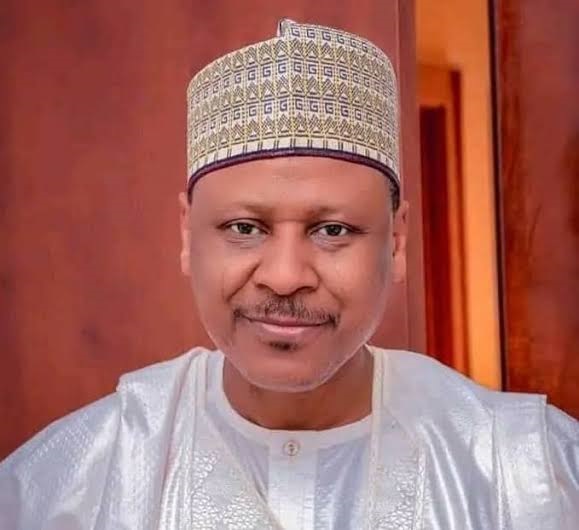
The Minister of Information and National Orientation, Mohammed Idris, has warned that restoring petrol subsidy could reverse some of the economic gains recorded under the Federal Government’s ongoing reforms.
Idris was reacting to comments by former Vice-President Atiku Abubakar, the presidential candidate of the African Democratic Congress, that he would restore the subsidy if elected President in 2027.
“If elected, I will bring back the oil subsidy, and whoever stole the money must refund it,” Atiku had said during an interview in Hausa.
In a statement issued on Monday by his Special Assistant on Media, Rabiu Ibrahim, Idris urged Nigerians to consider the opportunity cost of returning to the subsidy regime.
He questioned whether Nigeria could afford to prioritise petrol subsidy over programmes such as student loans, consumer credit for young people and increased allocations to state and local governments.
The minister warned that restoring the subsidy could also reduce funding available for roads, railways, electricity and security, while limiting government investment in healthcare, education and social protection.
Idris recalled that Nigeria spent about $10 billion on petrol subsidies in 2022, despite declining oil production and government revenues.
He said the World Bank had previously warned that the subsidy was consuming resources that could otherwise have been invested in critical sectors, including education, healthcare, infrastructure and social protection.
‘Subsidy savings created N15.8tn in resources’
The minister’s position comes after Finance Minister and Coordinating Minister of the Economy Taiwo Oyedele disclosed that petrol subsidy savings had mobilised N15.8 trillion in resources for the federation between June 2023 and December 2025.
Oyedele said the figure comprised N5.43 trillion for the Federal Government, N6.52 trillion for states and N3.88 trillion for local governments.
Idris, however, clarified that the N15.8 trillion did not represent a separate pool of cash but resources made available through the broader fiscal system.
According to him, the additional fiscal space has strengthened the ability of state and local governments to meet salary and pension obligations while funding essential services.
He said the government’s reform scorecard showed that about N6.47 trillion had been spent additionally on strategic infrastructure.
More than N400 billion was also committed to social investment programmes, including the Nigerian Education Loan Fund, the MOFI Real Estate Investment Fund and CREDICORP.
Idris argued that these interventions demonstrated how resources previously committed to petrol subsidy could be redirected towards programmes with broader economic and social benefits.
The National Orientation Agency had also said in July that savings from petrol subsidy removal had been reinvested in social welfare programmes, including the student loan scheme.
The minister therefore urged Nigerians to weigh the long-term implications of returning to the former subsidy regime, particularly its impact on government revenue and funding for critical public services.
