


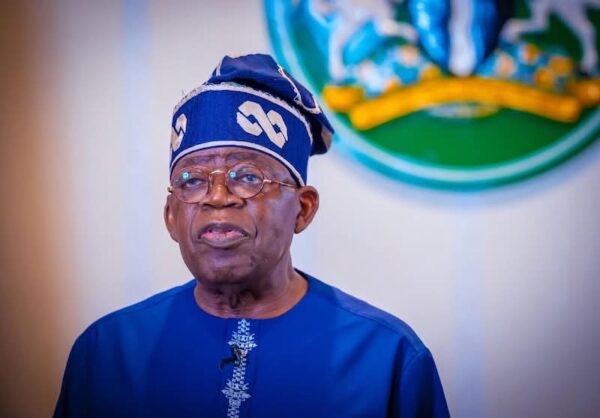
President Bola Ahmed Tinubu has renewed his commitment to the creation of state police, promising to accelerate the devolution of security powers to sub-national governments amid mounting insecurity across the country.
Speaking during a meeting on Tuesday with prominent indigenes of Katsina State, led by Governor Dikko Radda, President Tinubu said:
“I am reviewing all aspects of security. I have to create a state police.”
The President’s remarks have sparked fresh national debate over the decentralisation of policing, a move that has long been advocated by civil society groups, regional socio-political organisations, and security experts, but which has faced repeated delays at the federal level.
Renewed Support from Key Stakeholders
The pan-Yoruba socio-political group Afenifere welcomed the President’s renewed commitment, with its National Publicity Secretary, Jare Ajayi, expressing hope that state policing would be implemented before the end of 2025.
“For Tinubu to again openly describe state police as inevitable now means the Federal Government is ready to have it take off,” he said in Ibadan.
PANDEF (Pan-Niger Delta Forum) echoed similar sentiments, describing the creation of state police as “long overdue” and urging the National Assembly to initiate constitutional amendments to legitimise the decentralised force.
PANDEF’s National Publicity Secretary, Dr. Obiuwevbi Ominimini, said the current policing structure, in which Commissioners of Police report to the Inspector General rather than state governors, undermines state-level security efforts.
“There is already state policing, but it is unofficial,” Ominimini said, referring to the widespread use of local vigilante groups that operate with state support.
In the Middle Belt, the region’s leading advocacy group, the Middle Belt Forum (MBF), also called for swift implementation. Its President, Dr. Bitrus Pogu, dismissed concerns about potential abuse of power by state governors.
“We pretend that governors will abuse state police, as if the Federal Government is immune to such abuse,” he said.
Frustration Over Delays
Despite widespread support, implementation has stalled. Although all 36 states submitted detailed proposals on the formation of state police by December 2024, the National Economic Council (NEC) has deferred full deliberation on the matter three times, most recently in August 2025.
Kaduna State Governor, Uba Sani, confirmed that most states back the proposal, citing Nigeria’s ungoverned spaces and low police-to-population ratio.
“Most of us agreed that the establishment of state police is the way forward,” he said.
However, critics have accused the federal government of dragging its feet. Former Commissioner of Police, Emmanuel Ojukwu, argued that the government benefits from the current centralised structure and lacks the political will to implement real reform.
“They know the present system favours them. The unitary police, erroneously called federal, works for the establishment,” Ojukwu said.
He also faulted the National Assembly for failing to act on Section 214 of the Constitution, which currently designates the Nigeria Police Force as a federal institution.
Dissenting Views
Not everyone supports the initiative. The Northern Youth Council of Nigeria (NYCN) criticised the state police proposal as a “misplaced priority.”
Its National President, Isah Abubakar, warned that state-controlled police forces could be politicised and used to suppress opposition, arguing instead for reforms to strengthen the Nigeria Police Force (NPF).
“Creating state police is simply a waste of time. What we need is a commitment to fix and strengthen the current system,” Abubakar said.
He proposed expanding the NPF to at least five million officers, up from the current figure of under 300,000, to meet Nigeria’s population and security demands.
In the South-South, the Movement for the Survival of the Ogoni People (MOSOP) described state policing as a political distraction from more pressing issues, such as economic hardship and poor governance.
“Some of these security issues are caused by the government’s economic policies, not the absence of state police,” said MOSOP spokesperson Oscar Imeabe.
Federal Government Responds
In response to the criticisms, the Minister of Information and National Orientation, Mohammed Idris, defended the Tinubu administration, assuring Nigerians that the creation of state police remains a top priority in the government’s security reform agenda.
“The delay should not be interpreted as a lack of political will,” Idris said in an interview.
“The President is working with the National Assembly to dismantle political and bureaucratic bottlenecks that could stall the operationalisation of the state police.”
Idris also reiterated that the state police initiative is part of a multi-pronged approach to tackling insecurity, along with efforts to strengthen federal security forces.
Rising Insecurity Deepens Urgency
The renewed push comes amid escalating violence nationwide. According to the National Human Rights Commission, at least 2,266 people were killed in the first half of 2025—more than double the 1,083 recorded during the same period in 2024.
Recent incidents include:
- An armed attack on a mosque in Malumfashi, Katsina State, which left over 50 worshippers dead.
- Kidnappings in the Northwest, with over 70 hostages rescued during airstrikes near Pauwa Hill.
- A cholera outbreak in Zamfara State, where violence delayed humanitarian response, leaving at least 8 dead.
Security experts argue that the Nigeria Police Force is overstretched, and that state policing would allow local authorities to deploy quicker, community-based responses to these threats.
With security deteriorating and public pressure mounting, the Tinubu administration faces a critical test of political will. While supporters believe state police is the path toward decentralised, community-responsive security, opponents fear it could lead to abuse and deeper fragmentation.
All eyes now turn to the National Assembly, where constitutional reform will determine whether Nigeria adopts one of the most significant security changes in its democratic history.
