


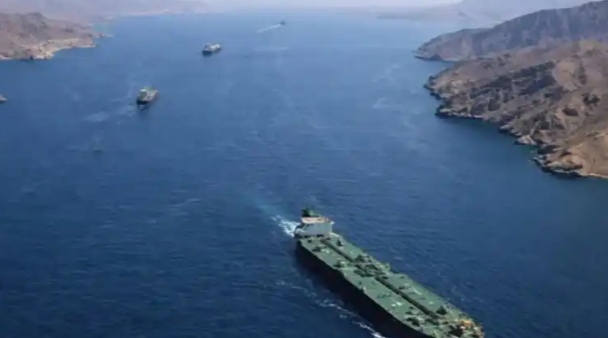
Iran has announced the renewed closure of the strategically important Strait of Hormuz, citing the continued presence of United States military forces in the region and Israel’s refusal to withdraw troops from southern Lebanon.
According to reports, the announcement was made on Friday by Iran’s Islamic Revolutionary Guard Corps (IRGC) through a statement broadcast over maritime radio channels. The development threatens to heighten tensions in the Middle East and raises concerns about global energy supplies, as the Strait of Hormuz remains one of the world’s most critical oil transit routes.
The IRGC accused Washington of violating a memorandum of understanding reportedly signed earlier this week between U.S. President Donald Trump and Iranian President Masoud Pezeshkian. Iranian officials said key provisions of the agreement included the withdrawal of American forces from the Persian Gulf region, Israel’s complete withdrawal from Lebanon, and the lifting of maritime restrictions.
“Since Israel’s withdrawal from Lebanon, the complete lifting of the naval blockade, and the withdrawal of American terrorist forces from the Persian Gulf and the region are among the main conditions of the agreement between Iran and the United States, the Strait of Hormuz will remain closed until these conditions are met,” the IRGC said.
In its statement, the IRGC also warned commercial and military vessels against approaching the waterway, stating that any ship violating the directive could be targeted.
Zebra News reports that an additional statement carried by the IRGC-affiliated Tasnim News Agency linked the closure directly to Israel’s military operations in Lebanon. The agency argued that the continued presence of Israeli forces in Lebanese territory undermines the agreement and called for the cancellation of future negotiations.
“The continuation of Israeli crimes and the occupation of Lebanese land signify the death of the agreement, and this must not be tolerated or overlooked,” the statement said.
The latest developments come as Switzerland confirmed that planned follow-up talks aimed at consolidating a broader Middle East peace agreement have been postponed. The accord, signed earlier this week, was intended to end hostilities involving Iran, facilitate the reopening of the Strait of Hormuz, and launch a 60-day negotiation process covering wider regional issues, including Tehran’s nuclear programme.
However, hopes for a sustained ceasefire have been challenged by renewed military activity in Lebanon. Israel’s military announced fresh strikes against Hezbollah positions in southern Lebanon on Friday, further complicating diplomatic efforts.
Under the terms of the reported agreement, Iran was also expected to receive a reconstruction package valued at $300 billion from the United States as part of post-conflict recovery efforts.
Meanwhile, President Trump pushed back against suggestions that Washington was negotiating from a position of weakness. In a post on Truth Social, the U.S. leader claimed the conflict had significantly weakened Iran and rejected assertions that the United States was acting out of desperation.
Zebra News understands that Trump said the United States would allow the 60-day negotiation window to proceed but ruled out providing direct financial assistance to Tehran.
“Iran is diminished,” Trump wrote, adding that the United States would not give Iran “ten cents” in funding.
The renewed closure of the Strait of Hormuz is expected to draw close attention from global markets and regional powers as diplomatic efforts continue amid heightened uncertainty across the Middle East.
