


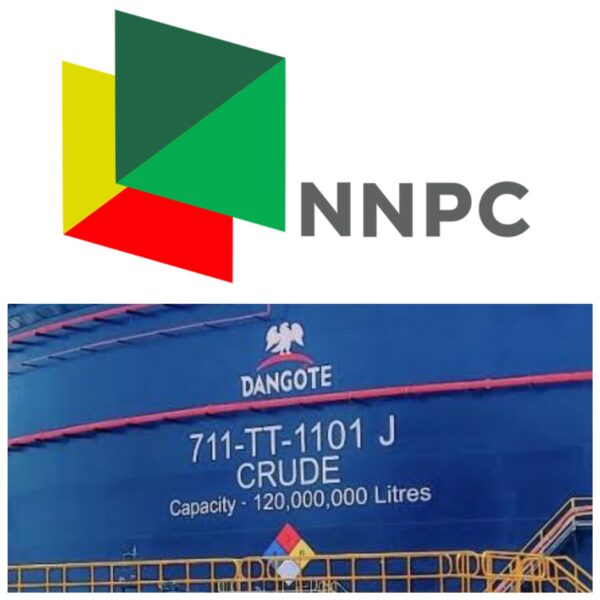
The Federal Government, through the Nigerian National Petroleum Company Limited (NNPC), has begun efforts to secure crude oil supplies for the Dangote Petroleum Refinery via third-party international traders, sources say. The initiative is aimed at sustaining domestic refining operations, but officials caution it may not immediately ease fuel costs for consumers.
Nigerians are currently facing steep petrol prices following recent increases linked to the $20 billion Lekki-based refinery. Oil industry insiders have confirmed that the refinery recently paused the loading of Premium Motor Spirit (PMS), fuelling speculation that another rise in fuel prices could be on the horizon.
This would mark the third petrol price hike in a single week, after gantry prices surged from N774 to N995 per litre. In many states, retail prices have now surpassed N1,000 per litre, with some filling stations charging as much as N1,200, intensifying economic pressures on households and businesses.
Recent market data highlights a shift in Nigeria’s crude sourcing. Analytics from Kpler indicate that imports from the United States rose to 41.13 million barrels in 2025, a 161 per cent jump from 15.79 million barrels in 2024.
Industry analysts warn that the temporary halt in PMS loading—now the second in a week—illustrates the logistical challenges of sustaining domestic supply, especially amid volatile global crude markets. Stabilising local fuel prices, they say, hinges on reliable crude allocations to domestic refineries.
The situation has been further complicated by geopolitical tensions in the Middle East, particularly the ongoing Iran-US conflict, which has disrupted supply chains and pushed Brent crude prices above $92 per barrel. The unrest around the Strait of Hormuz, a key energy transit route, has exacerbated global price pressures, making reliance on imported crude both costly and necessary.
Multiple sources within NNPC and the Dangote refinery confirmed that the national oil company is leveraging its global trading network to secure crude for the refinery at competitive international rates.
“Using our international crude trading capabilities, we are sourcing third-party supply for the refinery at prices that are competitive with prevailing market rates,” a senior NNPC official, speaking off the record, told The PUNCH.
The official added: “As the national company responsible for Nigeria’s energy security, NNPC remains committed to supporting domestic refining, including Dangote Petroleum Refinery. We continue to facilitate crude supply, even amid temporary shortages.”
However, Dangote Refinery has warned that importing crude may not immediately lower petrol prices. A refinery source explained that ongoing crises in the Middle East are affecting global energy costs, including crude, LNG, and refined fuels, which in turn impacts pricing worldwide.
The refinery also cited constraints in domestic supply, receiving only five cargoes per month from NNPC instead of the 13 required under the naira-for-crude policy. This shortfall forces reliance on imported crude purchased at international rates.
“While we receive about five cargoes a month from NNPC, paid for in naira, these shipments are priced at international market rates plus a premium and are insufficient to meet our needs for local distribution,” a refinery representative stated.
