


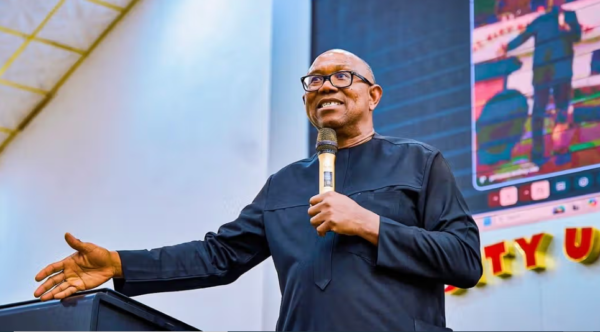
Peter Obi, the presidential candidate of the Nigeria Democratic Congress (NDC), has called on the Independent National Electoral Commission (INEC) to publish the academic credentials submitted by all candidates seeking elective office, saying the move would strengthen transparency and public confidence in Nigeria’s electoral process.
Obi made the call in a statement on Tuesday while reflecting on the contents of INEC’s nomination forms completed by political candidates.
The former Anambra State governor said a section of the nomination form, which asks whether a candidate has ever presented a forged certificate to INEC, highlights the need for greater accountability among those seeking public office.
“Further in the same Section E, Question 6, was: ‘Have you ever presented a forged certificate to INEC?’ Again, the answer is either Yes or No,” Obi said.
“This raises another important question: Why shouldn’t INEC, in the interest of ensuring that our leaders are exemplary in following the rules and to strengthen public confidence in our electoral process, publish the academic certificates and credentials submitted by every candidate seeking elective office?”
Obi argued that making such documents publicly accessible would improve transparency and reinforce trust in Nigeria’s democratic institutions.
“Transparency strengthens democracy and builds public trust,” he added.
Zebra News reports that Obi also used the statement to question the priorities of Nigeria’s political leadership amid the country’s worsening security and economic challenges.
According to him, another question contained in the nomination form, which asks whether a candidate has ever been adjudged to be of unsound mind, prompted him to reflect on the quality of leadership in the country.
“Can we, as the political leaders of today’s Nigeria, truly say we are exhibiting the characteristics of a sound mind?” he asked.
The former governor said it was difficult to justify the intense focus on politics at a time when many Nigerians continue to face insecurity, poverty and hunger.
“When Nigerians, including children and security personnel, are being abducted into the bushes, citizens cannot travel safely on our highways, several million Nigerians are uncertain where their next meal will come from, and several billions are being siphoned frivolously through non-existent agencies and projects, should politics really be our primary preoccupation?” Obi said.
He argued that Nigeria’s security and economic challenges should be treated as a national emergency requiring urgent and coordinated action.
“A sound-minded leadership would have declared these existential challenges a national emergency and immediately mobilised all relevant institutions, security agencies, experts, community leaders, and other critical stakeholders to confront them with urgency and resolve,” he said.
“At a moment like this, the survival, security, and stability of Nigeria must take precedence over every other consideration. This is a time for decisive action, not political calculation or the pursuit of partisan advantage.”
Obi further urged political leaders to place greater emphasis on competence, integrity and public service, insisting that Nigeria’s current challenges demand a departure from what he described as “politics as usual.”
