


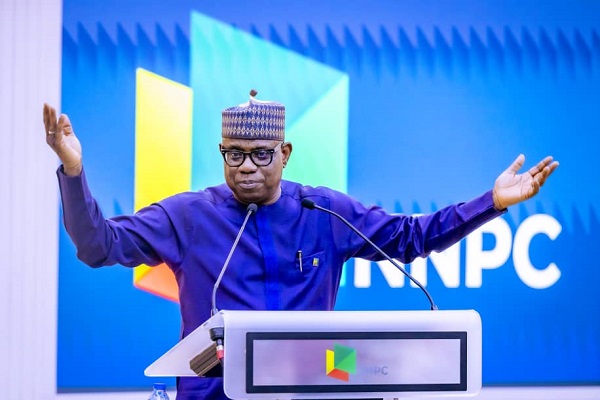
The Nigerian National Petroleum Company Limited (NNPCL) has confirmed significant crude oil, gas production, and power supply losses following the three-day nationwide strike by the Petroleum and Natural Gas Senior Staff Association of Nigeria (PENGASSAN).
In a letter dated September 29, 2025, and addressed to key regulatory agencies and national security authorities, NNPCL Group Chief Executive Officer, Bashir Ojulari, disclosed that the industrial action led to the deferment of approximately 283,000 barrels of oil per day, 1.7 billion standard cubic feet of gas, and a shortfall of over 1,200 megawatts of electricity generation.
Ojulari stated that the strike, which has now been suspended, resulted in a 16% loss in national oil production, 30% decline in marketed gas, and a 20% reduction in power supply. He warned that the situation could worsen if a lasting resolution is not secured.
“This equates to around 16 per cent of national oil output, 30 per cent of marketed gas, and 20 per cent of electricity generation. Should the situation continue, the impacts are expected to intensify, posing a material threat to national energy security,” the NNPCL boss stated.
The industrial action was triggered by a dispute between PENGASSAN and the management of the Dangote Petroleum Refinery over alleged mass transfers and termination of union members, as well as claims of replacing Nigerian staff with foreign nationals. Dangote Refinery has denied the allegations, attributing the staffing changes to operational restructuring.
The strike disrupted operations across several critical oil terminals and gas facilities, stalling crude and gas exports and impacting scheduled maintenance work, including turnaround operations at USAN and compressor maintenance at other key sites.
Ojulari noted that more than 100,000 barrels per day of crude oil and 1.341 billion standard cubic feet of monetised gas scheduled for restoration had also been delayed. He warned of potential demurrage claims as loading and export operations remained stalled at key terminals such as Brass.
“The disruptions pose systemic risks to energy supply, personnel and asset security, and the wider economy,” he said. “A sustainable solution is required to prevent such an extensive interruption of the overall energy infrastructure and to safeguard national energy security and stability.”
Despite the magnitude of the disruption, a temporary truce was reached following government intervention. PENGASSAN suspended the strike but emphasised that the decision was made in respect for federal authorities and ongoing dialogue—not due to confidence in the Dangote Group.
At a press briefing in Abuja, PENGASSAN President Festus Osifo said the union remained sceptical of Dangote’s commitment to the terms of the agreement brokered by the Ministry of Labour.
“We are only suspending, not calling off, this strike,” Osifo warned. “If any part of this agreement is broken, we will not give any warning. We will immediately resume our suspended industrial action.”
He dismissed reports that the strike was motivated by the collection of check-off dues, describing the allegations as “laughable.” Osifo clarified that the dispute centred on workers’ rights, fair pay, and union representation.
“This is not about dues. It is about the freedom of association and the welfare of our members,” he said.
He added that the workforce at the refinery voluntarily joined the union in search of improved working conditions and protections in line with global industry standards.
Although the strike has been suspended, PENGASSAN leadership stressed that they would closely monitor compliance with the agreement and resume action if necessary.
Meanwhile, the Federal Government has pledged to maintain oversight of the dispute, citing concerns over its implications for the economy and national energy stability.
