


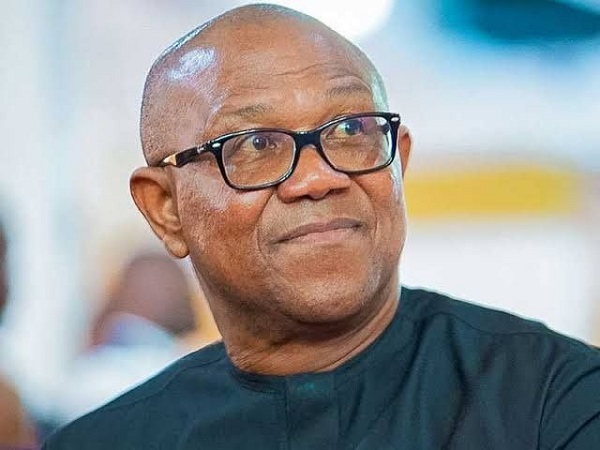
Former Anambra State Governor and presidential candidate of the Nigeria Democratic Congress (NDC), Peter Obi, has criticised what he described as sustained attacks on the Catholic Bishops’ Conference of Nigeria (CBCN), warning that Nigeria is becoming increasingly intolerant of truth and constructive criticism.
In a statement shared on his official social media platforms, Obi reacted to criticism directed at the Catholic Church following the bishops’ recent assessment of Nigeria’s economic and security situation.
According to Obi, the Catholic Church has never functioned as a political opposition but has consistently served as a moral voice and the conscience of the nation. He argued that the CBCN has a long tradition of commending governments when appropriate while also speaking out whenever the national interest requires it.
The former governor noted that other major religious organisations, including the Christian Association of Nigeria (CAN), the Nigerian Supreme Council for Islamic Affairs (NSCIA), Jama’atu Nasril Islam (JNI), and the Supreme Council for Shari’ah in Nigeria (SCSN), have also expressed concerns over insecurity, poverty, inflation and unemployment.
Obi said religious leaders remain in close contact with ordinary Nigerians and are therefore well placed to understand the hardships facing families and communities across the country.
He maintained that political leaders should embrace honest criticism as an opportunity to improve governance rather than attack those highlighting national challenges.
“Good governance depends on truth. When governments punish truth-tellers and reward sycophants with appointments, honest advisers withdraw, sycophancy thrives, and leaders become disconnected from reality,” Obi said.
The NDC presidential candidate described the criticism directed at the CBCN, particularly John Onaiyekan, as troubling, arguing that the bishops were merely reflecting concerns shared by Nigerians across religious and ethnic divides.
Obi also recalled the Catholic Church’s history of speaking against military and civilian governments, citing the 1998 visit of Pope John Paul II to Nigeria, during which the late pontiff challenged the military government of Sani Abacha over issues including the detention of MKO Abiola.
He argued that criticism from religious bodies should not be interpreted as political opposition, particularly when it concerns issues affecting all Nigerians, regardless of faith or ethnicity.
“Are insecurity, poverty, inflation, unemployment and hardship problems exclusive to a particular faith? Do these challenges recognise religious or tribal boundaries?” Obi asked.
He further praised Cardinal Onaiyekan’s decades of service, describing him as one of Africa’s most respected churchmen whose contributions to peace, dialogue, scholarship and national unity have earned widespread recognition.
According to Obi, personal attacks on the cleric undermine healthy public discourse and reflect an increasing intolerance of dissent within Nigeria’s political environment.
He added that religious leaders have a moral obligation to speak out when citizens are suffering, warning that silence in such circumstances would amount to a betrayal of their responsibility.
Obi also urged those around President Bola Tinubu to provide the President with honest assessments of the country’s condition rather than shielding him from criticism.
“The greatest service those around President Tinubu can render him is an honest appraisal of the situation. A leader who hears only praise will never fully understand the pain of his people or find the clarity needed to correct what is wrong,” he said.
