


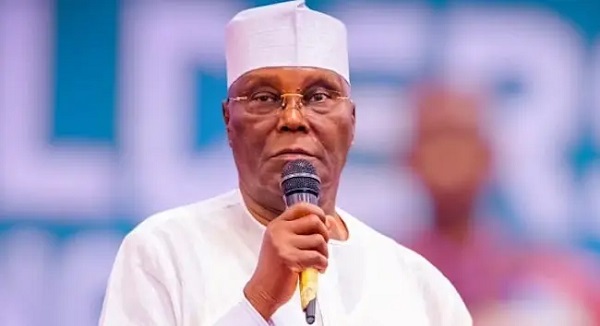
The Presidency has dismissed former Vice President Atiku Abubakar’s warning that rising hunger could spark social unrest reminiscent of the French or Russian Revolutions, calling the statement “cheap talk” and out of touch with Nigeria’s current economic trajectory.
The response was contained in a statement issued on Monday evening by the Special Adviser to the President on Information and Strategy, Bayo Onanuga.
Atiku, the 2023 presidential candidate of the Peoples Democratic Party (PDP), had cautioned that widespread hunger and worsening poverty could trigger mass anger similar to the 1789 French Revolution or the 1917 Bolshevik Revolution in Russia.
However, the Presidency rejected the comparison, insisting that the economic indicators show significant progress under President Bola Tinubu’s administration.
“Their latest statement demonstrates a disconnect from the authentic Nigerian reality,” the Presidency said, describing Atiku’s remarks as “reckless” and driven by political bitterness.
Presidency Highlights Economic Progress
Citing data from the National Bureau of Statistics (NBS) and other agencies, the statement outlined several indicators the government said reflect economic recovery:
- Inflation: Headline inflation has declined for the fifth consecutive month, falling to 20.12% in August.
- Trade Balance: Nigeria posted a record trade surplus, with non-oil exports now accounting for 48% of total exports, nearly matching crude oil at 52%.
- Foreign Reserves: The country’s foreign reserves have risen to nearly $42 billion, up from $32 billion at the time Tinubu assumed office in May 2023.
- Debt Settlements: The administration has cleared over $7 billion in arrears, including $800 million owed to foreign airlines.
- State Finances: States are reportedly now able to pay salaries, pensions, and gratuities on time, while also executing capital and social projects.
“Nigeria is recording unprecedented revenues under President Tinubu. The country is moving in the right direction,” the statement said.
The Presidency also accused Atiku and the PDP of contributing to the country’s current economic challenges through years of “mismanagement” during their time in power.
“Ironically, many of the challenges we face today stem from the economic mismanagement during the PDP years, when Atiku was Vice President,” it noted.
“President Tinubu and his team are working relentlessly to correct those errors, with bold reforms.”
While the administration touts progress, critics—including Atiku—argue that President Tinubu’s economic reforms, particularly the removal of fuel subsidies and exchange rate unification, have worsened the cost-of-living crisis.
Food inflation remains high, and poverty levels are still significant across the country, prompting calls for more targeted relief measures.
Despite these concerns, the Presidency insists that the gains from Tinubu’s policies will become more evident in the coming months.
“We are proud of the progress being made under President Tinubu’s leadership.
Atiku and his allies may choose to ignore these gains, but Nigerians can see and feel the positive changes taking place across the nation,” Onanuga stated.
