


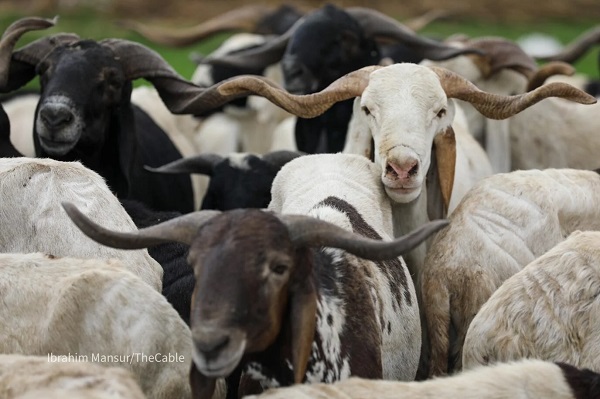
As the Eid al-Adha celebrations approach, Nigerians are facing an unexpected challenge: the soaring cost of sacrificial rams. In markets across the country, including Abuja and Ogun State, ram sellers are reporting sluggish sales despite an abundance of livestock—largely due to skyrocketing prices that have hit record highs.
At the heart of the problem is a combination of economic hardship, inflation, and ongoing border closures. Prices have more than doubled compared to last year, with some premium rams now selling for over ₦1 million.
“The Price Is Crazy, But What Can We Do?”
For buyers like Murtala Abdullahi, a Lagos resident preparing for the festivities, the cost hike has been nothing short of shocking.
“I bought two rams last year for ₦500,000. This year, I’m buying one ram for ₦500,000 and another for ₦700,000. The price is crazy, but what can we do? It’s the Nigerian economy,” he said.
At the Kugbo livestock market in Abuja, where rams priced at ₦1 million and above are not uncommon, traders say customers are scarce. Despite high supply, the market remains quiet.
Border Closures and Import Reliance
Shamsudeen Lawal, a ram dealer in Abuja, attributes the spike in prices partly to Nigeria’s heavy reliance on livestock imports—especially from neighbouring Niger Republic.
“Most of the rams we slaughter here in Nigeria come from Niger Republic. The closure of the border has created a shortage,” he explained.
“Last year, the entire market was filled with rams. This year, customers who used to buy 100 rams are now buying just 30 or 50 because there’s no money.”
A Call for Local Livestock Investment
To avoid future shortages and price shocks, Lawal is urging the Nigerian government to invest in domestic livestock farming.
“The government needs to empower our farmers so we can rear our own animals and not depend on neighbouring countries. This will make our country great—even if anyone closes their border.”
What’s Next for Eid Shoppers?
With the Eid al-Adha holiday just around the corner, many families are left making difficult decisions about how—or whether—they can afford to participate in the traditional sacrifice. For now, both sellers and buyers are hoping for a last-minute turnaround, but with the economy stretched thin, expectations are low.
