


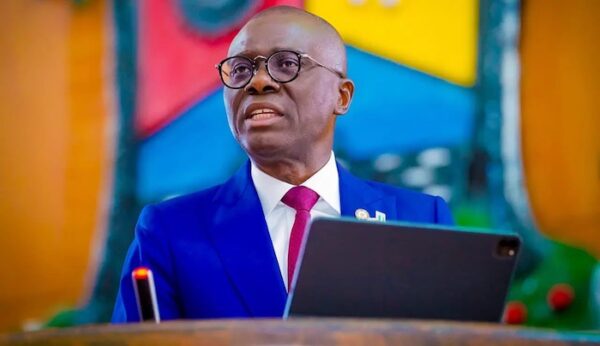
Lagos State Governor, Babajide Sanwo-Olu, has declared a state of emergency on waste management in the state, ordering immediate measures to address challenges affecting waste collection and disposal.
Sanwo-Olu, accompanied by his deputy, Dr Obafemi Hamzat, made the declaration on Wednesday during an inspection of the Olusosun dumpsite in Ojota.
The governor also met with stakeholders in the waste management sector at the dumpsite, where he assessed the challenges affecting municipal waste collection and outlined immediate, medium- and long-term measures to tackle the situation.
Sanwo-Olu acknowledged the slow pace of waste collection in parts of Lagos, attributing the situation partly to the inability of some Private Sector Participation (PSP) operators to meet their obligations in recent weeks.
He said waste compaction activities were ongoing simultaneously at the Olusosun and Solous 3 dumpsites, adding that completion of the exercises would help accelerate waste collection across the state.
The governor also said recent fires at the dumpsites had disrupted operations but noted that work had resumed, with contractors clearing the sites to facilitate daily waste disposal.
According to Sanwo-Olu, the completion of the ongoing projects would enable each dumpsite to receive about 450 trucks of municipal waste daily, effectively increasing the capacity available to PSP operators.
“In the past couple of weeks, we have seen pressure and slow turnaround in waste collection in different parts of the city. We have seen residents throwing waste indiscriminately at undesignated areas in the city,” he said.
“We are here to see what the problem is and for us to be able to declare a state of emergency so that we can take the state out of this unpleasant situation.”
Sanwo-Olu said the state government was working with development partners to construct a 2,400-metric-tonne transfer loading station at Olusosun to receive compacted waste before it is transported to Material Recovery Facilities.
He added that another transfer loading station of the same capacity was being developed at Solous 3 in Alimosho, with access roads expected to be ready within two to three weeks.
As part of the immediate response, the governor ordered the stabilisation and rehabilitation of access roads to the state’s five dumpsites to improve accessibility and speed up waste collection.
He specifically directed the rehabilitation of access roads to the Ewu Elepe and Oke Oso dumpsites.
Sanwo-Olu also disclosed that the state government had procured 160 modern compactors to boost the collection of waste from homes and roads.
He said development partners working with the Lagos State Waste Management Authority (LAWMA) would provide additional compactors, while the government would procure landfill compactors designed specifically for use at dumpsites.
“The other solution we are throwing into the mix is raising the capacity of the PSP operators. We currently have a number of compactors that are not fit and proper for the size of the city,” the governor said.
“We have ordered 160 modern compactors, and they will start coming in soon. This will immediately increase the capacity of waste collection from the tenements and roads to bring them to the dumpsites.”
Sanwo-Olu said PSP operators had also agreed to review their operations and remove companies that lacked the capacity to effectively operate in the sector.
“The PSP operators have pledged to reassess their own operations and purge themselves of unserious players in the business. They are willing to take only operators who have the capacity, knowledge and willingness to make additional investments in the business,” he said.
“We don’t want to have a situation where we will have 800 PSP operators for a job that can only be done by 400 operators.”
The governor added that PSP operators had committed to procuring additional trucks as the state government expands its fleet of compactors.
He said the government would work with the operators to de-risk financing for the required investments and prevent businesses in the sector from becoming financially unsustainable.
Sanwo-Olu identified the construction of transfer loading stations and Material Recovery Facilities as key components of the state’s medium- and long-term strategy for improving waste management.
He said Lagos residents would begin to see physical infrastructure being developed at the transfer loading stations and Material Recovery Facilities before the end of the year, although completion of the facilities was expected next year.
“We are building two Material Recovery Facilities. One of them is in Oke Oso, Epe; the other is at Erekiti in Badagry,” he said.
“The plan is, if the transfer loading stations are open, waste disposal will be rapid, and from there, we can transfer the compacted waste to recovery stations for further sorting and recycling.”
The governor also warned residents against dumping refuse indiscriminately in unauthorised locations, directing the immediate prosecution of anyone caught violating the regulations.
He further criticised what he described as ineffective supervision of waste management operations and disclosed that LAWMA would undergo organisational reforms aimed at improving efficiency and accountability.
Zebra News reports that the declaration comes as Lagos intensifies efforts to address mounting waste collection challenges and strengthen the state’s long-term waste disposal, recycling and recovery infrastructure.
