


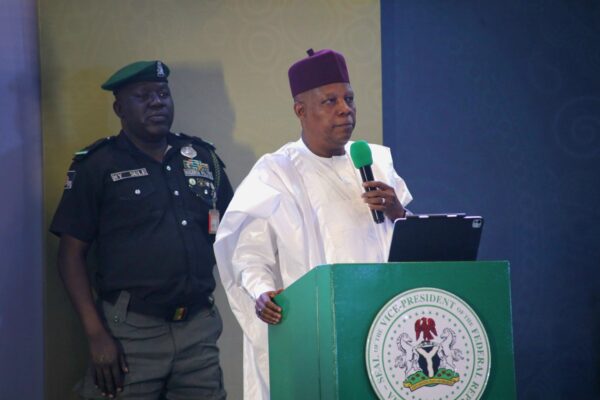
Vice-President Kashim Shettima has disclosed that some individuals allegedly attempted to create distrust between him and President Bola Tinubu shortly after they assumed office in 2023.
Zebra News reports that Shettima made the revelation on Tuesday during the public presentation of the autobiography of former military Head of State, Yakubu Gowon, in Abuja.
According to the Vice-President, the incident occurred about three months after their inauguration, when some individuals reportedly warned President Tinubu against wearing traditional garments Shettima had gifted him during the 2023 election campaign.
Explaining the background, Shettima said he had sourced traditional northern outfits and caps for Tinubu while they campaigned across northern Nigeria to help the then-presidential aspirant connect more closely with local communities.
“When we were campaigning for him to emerge as the candidate of the APC, we were going round the north. So, I got some materials and caps for him to blend with the northern crowd,” Shettima said.
He alleged that some individuals later approached the president, claiming the garments had been spiritually manipulated and warning that continued use could endanger Tinubu’s life and pave the way for Shettima to become president.
According to him, President Tinubu dismissed the claims and later informed him of the incident after his return from an official trip to China.
“But he said their story did not add up because when you gave those garments, I was an aspirant,” Shettima stated, adding that Tinubu deliberately continued wearing the outfits for about a week to demonstrate his rejection of such suspicions.
The Vice-President described the episode as part of the “gimmicks” often seen within political power circles in Nigeria.
Speaking further at the event, Shettima praised Yakubu Gowon for promoting unity and national cohesion during his time as military ruler, noting that Gowon was widely accepted across religious and ethnic divides.
He also commended Gowon’s role in the establishment of the Economic Community of West African States (ECOWAS), describing it as one of the continent’s most significant acts of political foresight aimed at strengthening regional cooperation, security, and economic integration across West Africa.
