


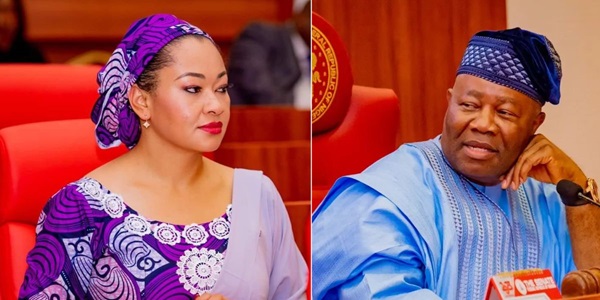
A political standoff is brewing in Nigeria’s upper legislative chamber, as Senator Natasha Akpoti-Uduaghan, representing Kogi Central, vows to return to plenary—despite unresolved legal and procedural questions following her controversial suspension.
The embattled lawmaker declared in a widely circulated video that she would resume her legislative duties in the Senate on Tuesday, shortly after a Federal High Court ruled her six-month suspension was unconstitutional and excessive.
“I thank you for your support. I am glad we are victorious today. We shall resume in the Senate on Tuesday by the grace of God,” she told jubilant supporters.
Court Rules Suspension Illegal, but Orders Penalty
Last Friday, Justice Binta Nyako of the Federal High Court in Abuja nullified Akpoti-Uduaghan’s suspension, which was imposed in March after she accused Senate President Godswill Akpabio of sexual harassment during a stormy plenary session.
While the court affirmed her right to return to the Senate, it also reprimanded her for contempt. Justice Nyako found that a satirical Facebook post she published—featuring a mock apology to Akpabio—violated a court order restricting public commentary on the case. As a result, Akpoti-Uduaghan was fined ₦5 million and ordered to issue a formal apology in two national newspapers and repost it on her Facebook page.
As of Monday evening, the apology had yet to be published.
Senate Responds with Caution
Despite the court’s decision, the Senate leadership has taken a wait-and-see approach. It insists that no official action will be taken regarding her reinstatement until the Certified True Copy (CTC) of the court judgment is obtained and reviewed.
In a statement issued Sunday, Senator Yemi Adaramodu, Chairman of the Senate Committee on Media and Public Affairs, emphasized that legal clarity was essential.
“Pending receipt and examination of the CTC, and acting on the advice of counsel, the Senate shall refrain from taking any steps that may prejudice its legal position,” the statement read.
According to Adaramodu, although Senate lawyers were present at the hearing, the full judgment was not read aloud in court—prompting the need for a formal application to access the detailed ruling.
What’s Next?
Akpoti-Uduaghan’s return—if it happens—may spark tension on the Senate floor, as her suspension was initially viewed by critics as politically motivated and unduly harsh. Civil society groups and human rights advocates have widely condemned the Senate’s move as an effort to silence a dissenting voice.
Her legal battle, which challenged the legitimacy of her suspension, has evolved into a broader test of parliamentary authority, judicial oversight, and the limits of free speech in Nigeria’s democratic process.
For now, all eyes are on Tuesday’s plenary. Will Akpoti-Uduaghan walk through the Red Chamber’s doors—and if she does, will she be allowed to take her seat?
