


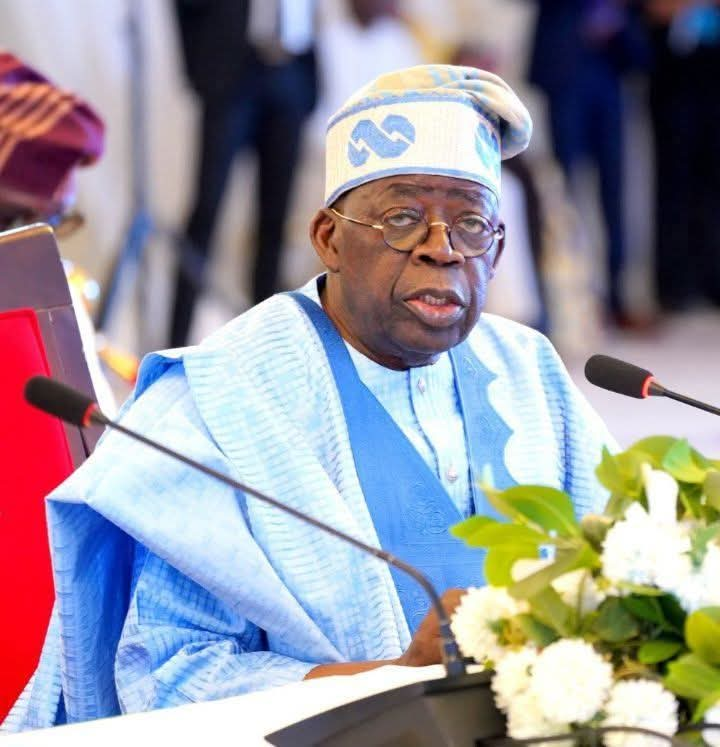
President Bola Tinubu has attributed the recent increase in insecurity across the country to individuals who allegedly benefited from the fuel subsidy regime and the former multiple foreign exchange system.
According to The Nation, the President made the remarks on Wednesday at the launch of the book The NADECO Story, held at the MUSON Centre in Onikan, Lagos. He was represented at the event by former Ogun State Governor Olusegun Osoba.
Speaking on behalf of the President, Osoba said Tinubu is aware of what he described as deliberate attempts by certain vested interests to destabilise the country in response to ongoing economic reforms.
As reported by Zebra News, the President linked the alleged resistance to his administration’s policies—particularly the removal of fuel subsidy and the unification of exchange rates—to groups that previously profited from the old system.
“He is aware that there is a deliberate attempt to disrupt the peace of the country by those he knew he had offended by cancelling the multiple exchange rate regime and removing fuel subsidy,” Osoba said.
Tinubu argued that the reforms have significantly reduced distortions in the foreign exchange market, noting that the gap between the official and parallel market rates has narrowed considerably.
He stated that while the economy and security remain the central focus of his administration, efforts are ongoing to stabilise the system and confront what he described as sabotage by entrenched interests.
“You can see the difference between the parallel and the official markets is virtually zero,” he said, adding that the naira, which once traded at significantly weaker levels, has shown signs of stabilisation under the current policy direction.
Zebra News understands that the President also accused some individuals involved in forex round-tripping of continuing efforts to undermine the reforms, insisting that his administration remains committed to restructuring the economy despite opposition.
He maintained that addressing economic and security challenges remains the government’s top priority, while other political issues would be handled in due course.
The remarks have continued to generate reactions across political and economic circles, with analysts divided over the impact of recent reforms on Nigeria’s security and broader stability.
