


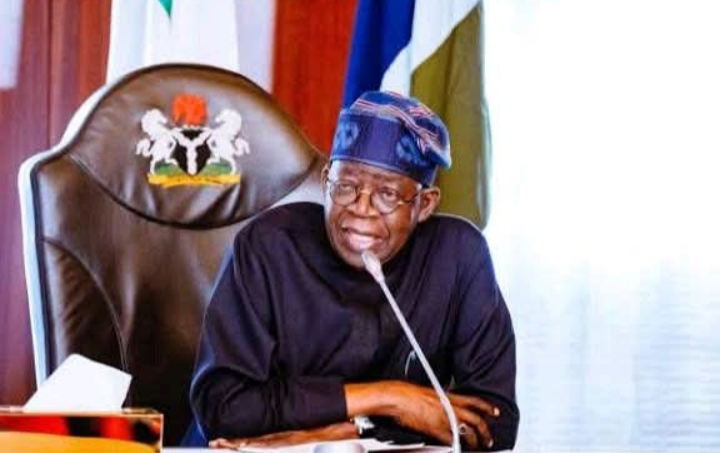
Zebra News gathered that fresh questions, anxiety and sharp divisions have erupted across Nigeria’s oil and gas industry following President Bola Tinubu’s signing of Executive Order No. 9 of 2026, directing the immediate remittance of key oil and gas revenues into the Federation Account.
The directive, aimed at strengthening fiscal discipline and ensuring that all revenues due to the federation are paid directly into a central account for distribution among the three tiers of government, has sparked concern within major institutions including the Nigerian Upstream Petroleum Regulatory Commission (NUPRC), the Nigerian National Petroleum Company Limited (NNPCL), and the Midstream and Downstream Gas Infrastructure Fund (MDGIF).
While the Federal Government and some industry stakeholders have praised the order as a bold transparency reform, regulators, unions, and experts warn that its implementation could disrupt funding structures carefully designed under the Petroleum Industry Act (PIA), potentially affecting regulatory independence, investor confidence, and operational stability.
At the heart of the controversy is the reallocation of royalties, taxes, profit oil, and related revenues—particularly from production sharing contracts (PSCs)—directly into the Federation Account, in line with Section 162 of the Constitution.
Under the PIA framework, the NUPRC was empowered to retain a four per cent cost of collection as part of its statutory funding mechanism. In 2025 alone, the commission reportedly generated about N322.8bn from this source, while expending roughly N88bn on staff salaries and allowances in 2024.
Two senior officials at the commission, who spoke anonymously due to the sensitivity of the matter, described the four per cent cost of collection as not a privilege but a legally backed funding structure intended to shield the regulator from bureaucratic delays and political interference.
“The Petroleum Industry Act clearly provides for how the commission is funded,” one official said. “The question many of us are asking is whether an Executive Order can override an Act of the National Assembly.”
They argue that returning the commission to the conventional federal “envelope budgeting” system—where agencies depend on annual budget approvals and releases from the Ministry of Finance—could undermine its operational flexibility.
According to them, the PIA deliberately structured NUPRC’s funding to ensure it could recruit and retain highly skilled professionals, offering remuneration comparable to international oil companies. Without predictable funding, they warn, regulatory effectiveness could suffer.
“When you weaken a regulator in a sector as sensitive as upstream oil and gas, you create room for compromise,” another official cautioned, adding that delayed salaries or welfare uncertainty could expose the sector to risks, including sabotage and security breaches.
Inside NNPCL, reactions have been mixed. Some senior officials privately described the order as disruptive, particularly for production sharing contracts that dominate Nigeria’s deepwater oil assets.
Under PSC arrangements, revenues are often received in kind—as barrels of crude oil—rather than direct cash payments. NNPCL, acting as concessionaire, lifts and sells the government’s share of crude, remitting proceeds accordingly.
One senior official explained that between 400 and 500 staff oversee PSC operations daily across 39 sites, including 14 producing deepwater fields. He warned that altering the remittance mechanism without clarity could create confusion in cost verification, crude lifting schedules, and loan repayment structures.
“Deepwater contracts are built on production sharing, not cash payments,” he said. “Royalties and taxes are represented in barrels. Someone must sell those barrels and remit the cash. That is how the contracts are designed.”
He further raised concerns about crude-backed loans, noting that Nigeria secured approximately $3.175bn in 2023 using crude as collateral. If remittance flows are abruptly altered, lenders may question repayment mechanisms.
Investors pursuing at least three major deepwater developments are reportedly seeking clarification, worried that sudden policy shifts could signal fiscal instability.
However, another senior official struck a more optimistic tone, insisting that NNPCL remains stable and capable of adapting to the new fiscal landscape.
“Operations across the value chain are ongoing,” he said. “The directive affects remittance channels, not production, gas processing, or project execution.”
He confirmed that the company is reviewing its capital allocation strategy to align with the new policy direction while maintaining its focus on gas monetisation and cost efficiency.
Labour unions have responded swiftly.
The Nigeria Union of Petroleum and Natural Gas Workers (NUPENG) has called on President Tinubu to urgently convene a broad stakeholders’ meeting to clarify the directive’s implications.
Its president, Williams Akporeha, said workers across upstream, midstream, and downstream operations are anxious about job security and labour agreements.
“The absence of detailed public engagement has generated tension within the sector,” he warned.
Meanwhile, the Petroleum and Natural Gas Senior Staff Association of Nigeria (PENGASSAN) has strongly rejected the order, describing it as a threat to staff welfare and institutional stability. The union has scheduled an emergency National Executive Council meeting to determine its next steps.
Not all stakeholders are opposed.
The Petroleum Products Retail Outlets Owners Association of Nigeria (PETROAN) has commended the President, describing the order as a courageous step toward accountability and fiscal discipline.
Its national president, Dr Billy Gillis-Harry, said centralised remittance would strengthen public oversight and improve macroeconomic stability. He argued that compelling NNPCL to remit revenues directly would reinforce its transformation into a commercially disciplined national energy company.
Similarly, the Nigeria Revenue Service defended the reform. Its Executive Chairman, Zacch Adedeji, explained that the elimination of “cost of collection” practices ensures agencies are funded through transparent budgetary allocations rather than deductions from revenue.
“It is the duty of government to fund its agencies,” he said, comparing regulatory bodies to law enforcement institutions that do not depend on the number of arrests to determine their budget.
The directive has also triggered legal debate.
Energy law professor Ayo Ayoade of the University of Lagos cautioned that executive orders cannot override Acts of the National Assembly. While acknowledging constitutional provisions that empower the President, he warned that bypassing statutory frameworks could create legal uncertainty.
“An Act created by national assent is superior to an executive order,” he said.
Economic analyst Muda Yusuf, Chief Executive Officer of the Centre for the Promotion of Private Enterprise, echoed concerns about cash flow disruption. He stressed that both NUPRC and NNPCL require stable funding to manage contractual obligations and vendor commitments.
“These institutions are critical to the economy,” he said. “Their funding must be credible and flexible. Throwing them into the envelope system could paralyse operations.”
However, Yusuf noted that constitutional supremacy may give the President legal backing, and he expressed confidence that the executive and legislature could amend the PIA if necessary to align it with the new policy direction.
For state governments, the order may translate into increased allocations from the Federation Account Allocation Committee. An earlier analysis suggested that federal, state, and local governments could receive an additional N14.57tn based on projected revenue inflows.
This prospect has strengthened support for the directive among subnational leaders, who have long argued for stricter central remittance of oil revenues.
Implementation has already begun, with revenues reportedly being channelled into designated Federation Account structures. The Federal Government has warned that any breach would constitute a violation of a lawful Executive Order.
Yet, beneath the surface, apprehension remains palpable within agencies whose operational models are being reshaped.
The unfolding situation presents a defining test of the balance between executive authority and statutory independence in Nigeria’s most strategic industry. It also raises broader questions about policy consistency at a time when the country is seeking to boost crude production to three million barrels per day by 2030 and attract over $12bn in annual investments.
For now, the oil and gas sector stands at a delicate juncture—caught between the promise of fiscal transparency and the fear of operational disruption. Whether the reform strengthens Nigeria’s petroleum governance or triggers unintended consequences may depend on how swiftly clarity, engagement, and legislative alignment follow in the weeks ahead.
