


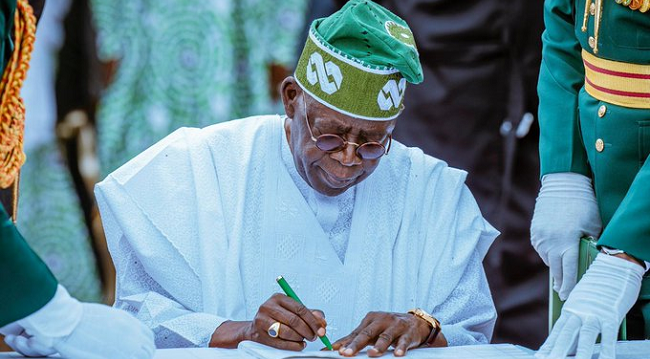
The President Bola Ahmed Tinubu led administration (FG) has borrowed a total of N17.36 trillion from domestic and foreign sources in the first ten months of 2025, exceeding its prorated borrowing limit by more than half.
According to data from the Debt Management Office (DMO) and the Central Bank of Nigeria (CBN), the total amount represents a 55.6% overshoot of the N10.9 trillion permitted under the 2025 Appropriation Act on a 10-month basis. The full-year borrowing ceiling in the budget is N13.08 trillion.
A breakdown of the figures shows that as of October 2025, the government had raised N15.8 trillion from domestic investors through FGN Bonds, Treasury Bills, Sukuk, and Savings Bonds, while N1.56 trillion came from external sources as of mid-year.
Last week, the FG also initiated plans to raise an additional $2.35 billion (about N3.38 trillion) via Eurobond issuance, which could lift total borrowings for the year to N20.74 trillion.
Analysts project that if the current borrowing pattern continues, total debt raised in 2025 could approach N23 trillion — roughly 80% above the figure approved in the Appropriation Act.
Fiscal Concerns
The 2025 budget projected N54.99 trillion in expenditure and N41.91 trillion in revenue, leaving a deficit of N13.08 trillion to be financed by domestic and external loans. Based on this, the government’s monthly borrowing limit should average N1.09 trillion.
However, data indicate that between January and October, the government borrowed:
- N11.43 trillion through Treasury Bills, up 4.6% year-on-year;
- N4.04 trillion through FGN Bonds, down 22% YoY;
- N40.19 billion through FGN Savings Bonds, up 5.6% YoY; and
- N300 billion through Sukuk issuance, compared to no issuance last year.
Analysts Warn of Debt Trap
Financial experts have expressed concern that the government’s persistent overshooting of its borrowing targets, despite modest revenue growth, could worsen fiscal instability.
Andrew Uviase, Managing Partner at Ecovis OUC, described the trend as “a clear reflection of fiscal indiscipline and poor expenditure control.”
“The government still needs to do a lot more in reducing the cost of governance,” he said. “Without transparency and honesty in spending, excessive borrowing will continue because, realistically, money is never enough.”
David Adonri, Vice Executive Chairman of Highcap Securities, blamed the surge on “aggressive and unrealistic revenue assumptions,” especially regarding oil benchmarks.
“The 2025 budget was based on 2.06 million barrels per day at $75 per barrel — both overly optimistic,” he noted. “Actual production has averaged 1.6–1.7 million barrels, while oil prices have slipped to around $65.”
Adonri warned that government’s “addiction to debt” undermines fiscal consolidation despite supposed revenue gains from the removal of fuel and FX subsidies.
Similarly, Tunde Abidoye, Head of Research at FBNQuest Merchant Bank, said the overly ambitious revenue assumptions have led to “inevitable borrowing overruns.”
Public policy analyst Clifford Egbomeade attributed the borrowing spike to weak revenue performance and high debt-servicing costs.
“With oil production averaging 1.4 million barrels per day and inflation eroding consumption, VAT and company tax receipts fell short of projections,” he explained. “Double-digit bond yields and deferred Eurobond issuance pushed the Treasury toward short-term borrowing.”
Experts reacts
Analysts warn that unless the government reins in spending and broadens its revenue base, Nigeria risks falling deeper into a self-reinforcing debt cycle that could crowd out private sector credit, stifle economic growth, and worsen living costs.
