


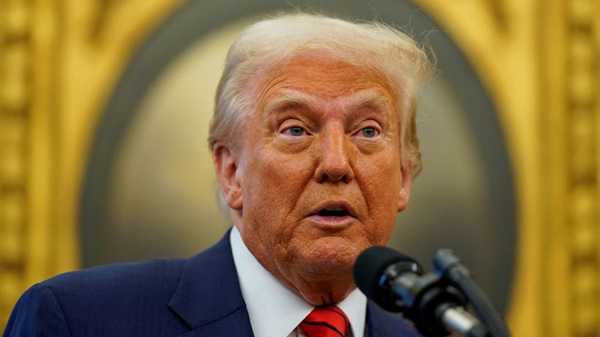
U.S. President Donald Trump announced a “very successful” military strike targeting three key Iranian nuclear facilities—Fordow, Natanz, and Isfahan—via Truth Social
“We have completed our very successful attack … All planes are now outside of Iran’s airspace. A full payload of BOMBS was dropped on the primary site, Fordow … NOW IS THE TIME FOR PEACE!” he declared .
Tactical Details & Weaponry
- B-2 stealth bombers were deployed, accompanied by Tomahawk cruise missiles, to strike these hardened and underground sites.
- The mission marked the first-ever operational use of the GBU-57 Massive Ordnance Penetrator (MOP)—a 30,000-pound bunker-buster designed to penetrate up to ~60 m of rock or 18 m of reinforced concrete, effectively targeting deeply buried facilities like Fordow.
Global Reaction & Implications
- The United Nations and international observers warned of a significant escalation in regional conflict.
- Iran condemned the strikes as illegal violations of international law, vowed retaliation, and insisted it would continue its nuclear program.
- Israeli PM Benjamin Netanyahu praised the joint action, emphasizing the collaboration between the U.S. and Israel in neutralizing Iran’s nuclear ambitions .
- U.S. lawmakers expressed mixed reactions—while some Republicans supported decisive action, others questioned the legality of bypassing Congressional authorization .
Strategic & Technical Overview
- Historical analysis and expert insights highlight that while bunker-bster bombs like the MOP are powerful, their effectiveness on deeply buried sites remains uncertain .
- Iran has preemptively hardened its nuclear facilities with deep tunnels and reinforced concrete—some over 80 m underground—possibly beyond MOP penetration capacity.
What’s Next?
The U.S. has called for diplomacy, but Iran’s threats of retaliation—potentially via the Strait of Hormuz or through its proxies—heighten the risk of regional escalation .
This marks a significant shift in U.S. military posture, marking the first direct use of bunker-busters against Iran. As global leaders urge de-escalation, the world watches closely for possible counter-strikes or broader involvement from additional actors.
