


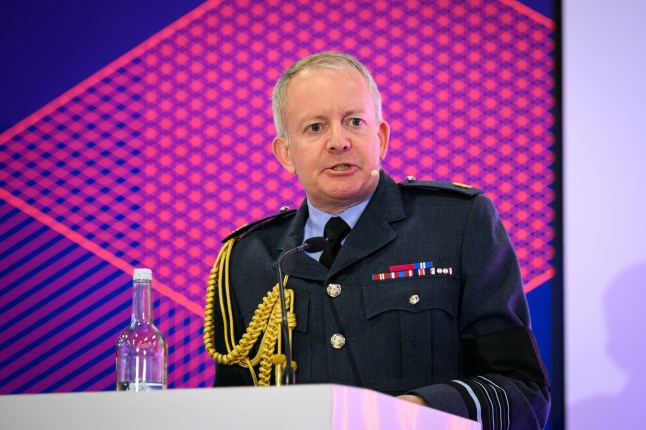
The United Kingdom may need to make difficult choices and reassess its national priorities as it confronts growing security threats from Russia, the country’s Chief of the Defence Staff, Sir Richard Knighton, has warned.
Speaking on BBC Radio 4’s Today programme, Sir Richard described the current security environment as the most dangerous he has experienced in his 35-year military career and stressed the need for Britain and its allies to strengthen their military readiness.
According to him, Russia continues to employ a range of tactics, including cyber attacks, technology smuggling, sabotage operations and assassination attempts, to test and undermine Western defences.
“In my 35-year career, this is the most dangerous period that I have known, and as a consequence, it is important that we enhance the capability and the readiness of our armed forces alongside our allies to deter our adversaries from doing something daft,” Sir Richard said.
He added that the nature of modern warfare is changing rapidly and that Britain must invest more heavily in emerging military technologies, particularly drones.
Zebra News reports that the defence chief emphasised that while the UK has spent the past two decades preparing for limited and short-duration conflicts, recent global developments suggest that nations must now prepare for prolonged military engagements.
“Over the last two decades we have been preparing for shorter wars and for conflicts that are confined and limited. What we need to ready ourselves for is potentially much greater, longer conflicts, as we’ve seen in Ukraine,” he stated.
The warning comes ahead of the United Kingdom’s anticipated Defence Investment Plan, which Prime Minister Sir Keir Starmer is expected to unveil before the NATO summit scheduled to begin on July 7 in Turkey.
Earlier this week, Defence Secretary John Healey informed Parliament that the government was finalising plans to increase defence spending as part of efforts to strengthen Britain’s military capabilities.
Concerns over European security intensified last week after Russian drones reportedly struck a residential building in Romania, a NATO member state. The incident prompted Romania’s Foreign Minister to call for consultations under Article 4 of the NATO treaty, which allows member nations to discuss threats to their security.
Prime Minister Starmer described the incident as a serious violation of NATO airspace and reiterated the need for stronger defence preparedness.
Zebra News understands that the proposed Defence Investment Plan is expected to include more than £18 billion in additional military spending, although reports indicate discussions are ongoing within government over the scale of the expenditure due to affordability concerns.
Speaking during a visit to a defence contractor in Wiltshire, Starmer said the forthcoming plan would provide the financial backing required to implement the objectives outlined in the UK’s Strategic Defence Review.
“That is the plan that says here’s the money that goes with the capability,” the Prime Minister said.
“We bring the two together, and it is another step up, it is another increase in spending, but it is necessary, it’s the right thing to do to defend our country.”
He confirmed that the plan will be published ahead of the NATO summit, where defence spending and European security are expected to dominate discussions among alliance leaders.
