


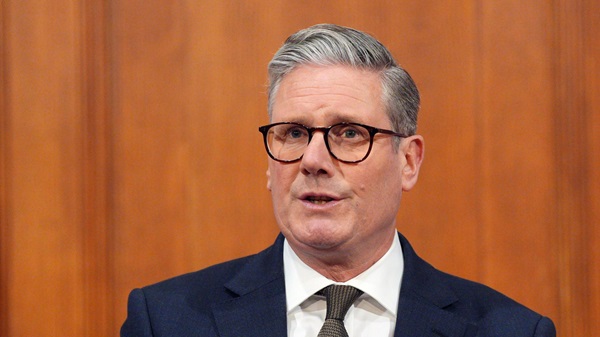
British Prime Minister Keir Starmer is taking a firmer stance on migration, announcing that his government is in talks with foreign nations to establish “return hubs” — centers for asylum seekers whose claims have been rejected in the UK.
Speaking during a diplomatic visit to Albania on Thursday, Starmer told GB News that the proposed hubs would serve as holding centers for those facing deportation after exhausting the UK’s asylum process.
“We are now in talks about return hubs, where individuals who have completed the UK asylum process and are due to be removed can be returned through such arrangements,” he said.
A New Direction on Migration?
The move comes as Labour tries to tighten its grip on irregular migration, especially the growing number of small boat crossings across the English Channel. With more than 12,500 people making the journey so far this year, migration has once again become a major political fault line.
Adding to the pressure: Nigel Farage’s Reform UK party, which has seen a surge in support thanks to its hardline anti-immigration stance — particularly during the recent local elections.
Starmer’s new policies appear to be aimed at cutting off that political oxygen.
From Rwanda to Return Hubs
This shift is particularly striking given that Labour, after taking office, scrapped the previous Conservative government’s controversial Rwanda deportation plan. But with the net migration figure hitting a staggering 906,000 in 2023 (a sharp rise from the decade-long average of 200,000), the political mood has shifted dramatically.
During his visit to Albania — a country often mentioned in UK migration discussions — Starmer emphasized bilateral cooperation and the need to crack down on illegal migration routes.
What Else Is Changing?
The “return hubs” announcement follows a flurry of recent Labour-led immigration reforms, including:
- Stricter visa rules for foreign care workers
- Tougher residency requirements for permanent settlement
- Expanded powers to deport non-citizen criminals
All these changes form part of Labour’s broader pledge to bring net migration down, a promise made in its general election manifesto.
A Balancing Act
While critics worry the policies could harm vulnerable migrants or create logistical nightmares abroad, supporters say Starmer is finally matching rhetoric with action on an issue that has dominated UK headlines for years.
With Labour navigating both public concern and party ideals, Starmer’s challenge is to walk a fine line: regain control of the migration narrative without abandoning the human rights commitments many of his supporters still expect.
