


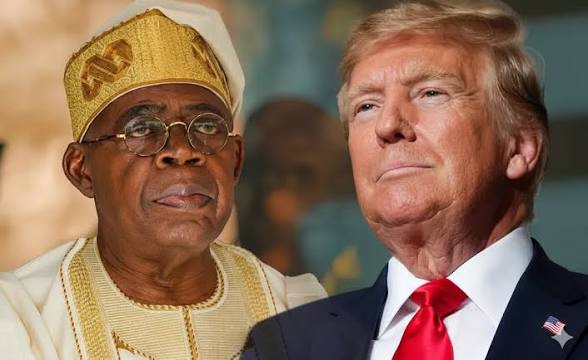
United States officials have told Congress that violence against Christians in Nigeria continues, one year after President Donald Trump designated the country a “Country of Particular Concern” (CPC) over religious freedom violations.
The officials made the assessment on Thursday, November 12, during a hearing organised by the US House Foreign Affairs Subcommittee on Africa to examine Nigeria’s response to attacks on vulnerable communities.
The subcommittee chairman, Chris Smith, described the designation as a “wake-up call for Nigeria” and urged the Federal Government to strengthen efforts to protect religious communities, particularly Christians, from attacks by armed groups.
He specifically cited Boko Haram and the Islamic State West Africa Province (ISWAP) among the groups responsible for attacks.
Riley Barnes, a US State Department official responsible for democracy, human rights and labour, acknowledged that Nigeria had taken steps to address the violence but said the measures had yet to improve security for Christian communities in the Middle Belt.
“There are still rising death tolls and kidnappings. So, I think we have this posture of trust but verify,” Barnes said.
Another State Department official responsible for African affairs, Frank Garcia, said Washington had worked closely with Nigerian authorities to address attacks on Christian communities and ensure that perpetrators faced accountability.
However, he acknowledged that violence had continued despite those engagements.
Republican Representative Riley Moore called on the US government to retain Nigeria’s CPC designation and closely monitor the country’s forthcoming presidential election.
“We cannot take this CPC designation off this country. They have not done enough,” Moore said.
Smith said Congress would consider additional measures to address the violence and prevent further attacks on Christian communities in Nigeria.
Zebra News reports that the congressional hearing has renewed scrutiny of Nigeria’s efforts to protect religious communities and address insecurity, particularly in parts of the country’s Middle Belt.
