


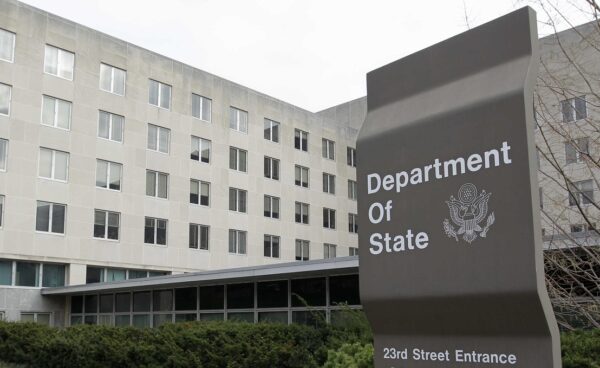
A report by the United States Department of State has identified insecurity, corruption, port inefficiencies and regulatory uncertainty as major obstacles to investment in Nigeria, warning that the challenges continue to weigh on the country’s business environment despite signs of macroeconomic stability.
In its 2026 Investment Climate Statements on Nigeria, the department said the country’s investment climate had been shaped by the outcomes of what it described as “painful but necessary” structural reforms introduced by President Bola Tinubu’s administration.
The report noted that the removal of fuel subsidies and liberalisation of the foreign exchange market initially triggered significant economic volatility, although some indicators pointed to stabilisation in early 2026.
However, it warned that security concerns, administrative bottlenecks and the social consequences of the reforms remained important considerations for foreign investors.
“The security environment is a primary variable which gives pause to potential investors,” the report said.
Insecurity Raises Investor Concerns
The department noted that attacks on oil infrastructure in the Niger Delta had declined, but oil theft and illegal bunkering continued to pose challenges.
It also warned that the expansion of terrorist and armed bandit groups in northern Nigeria was undermining investment prospects in agriculture and mining.
“In the North, the expansion of terrorist and ‘bandit’ groups continues to degrade the climate for agribusiness and mining,” the report stated.
The report also raised concerns about how foreign business executives could be treated during regulatory disputes, citing the nearly eight-month detention in 2024 of Tigran Gambaryan, a US citizen and Binance executive.
It said the use of detention and restrictions on leaving the country in such disputes could create uncertainty for foreign executives considering investment in Nigeria.
Zebra News reports that the US assessment identifies security and regulatory risks alongside infrastructure and administrative challenges as factors affecting investor confidence.
Port Delays Described As ‘Hidden Tax’
The report identified inefficiencies at Nigerian seaports as another major obstacle, particularly for businesses that depend on imports and exports.
“Port inefficiency remains a significant ‘hidden tax’ on investment,” it said.
According to the report, the Lekki Deep Seaport handled $9.6bn in trade in 2025 and operated at 50 per cent capacity, helping to ease pressure on older facilities.
However, cargo dwell times at the Apapa and Tin Can Island ports reportedly exceeded 20 days because of manual examinations and other bottlenecks.
To address the problem, the government launched the first phase of the National Single Window (NSW) on March 27, 2026.
The digital platform is designed to integrate trade-related agencies, including the Nigeria Customs Service, the National Agency for Food and Drug Administration and Control, and the Standards Organisation of Nigeria, into a single workflow.
The initiative targets a reduction in cargo dwell time to fewer than seven days and the elimination of 80 per cent of manual paperwork by the end of 2026.
Most Capital Inflows Were Portfolio Investments
The US report acknowledged an increase in capital inflows but cautioned that the figures did not necessarily indicate a comparable rise in long-term investment in physical infrastructure.
It said Nigeria’s capital importation reached $21bn in October 2025, representing a substantial increase from 2024.
However, the report estimated that 92 per cent of the inflows consisted of foreign portfolio investment, which can move quickly in response to interest rates and market conditions, while foreign direct investment in physical infrastructure remained modest.
Nigeria continues to permit full foreign ownership in most sectors, subject to restrictions in certain industries and applicable licensing requirements, the report noted.
It also highlighted the Nigerian Investment Promotion Commission’s One-Stop Investment Centre, which coordinates 27 government agencies to help investors navigate administrative processes.
According to the report, US foreign direct investment in Nigeria reached $7.9bn at the end of 2024, an increase of 25 per cent from the previous year. Bilateral trade between Nigeria and the United States reached $14.8bn in 2025.
Reforms Carry High Social Costs
The department said Nigeria’s economic reforms had improved some macroeconomic indicators but imposed substantial costs on households.
“The fiscal correction came at a high social cost,” the report said.
It noted that petrol prices had risen to around five times their 2023 levels following the removal of fuel subsidies, contributing to pressure on household budgets. Citing an April 2026 World Bank report, it also referenced an estimated national poverty rate of 63 per cent in 2025.
The report said Nigeria’s gross domestic product growth increased from 3.3 per cent in 2023 to 4.1 per cent in 2024, before easing slightly to 4 per cent in 2025.
It also cited Central Bank of Nigeria figures showing foreign exchange reserves of $50.45bn in February 2026, which it described as a 13-year peak.
On inflation, the report said headline inflation reached 34.8 per cent in late 2024 before falling to 15.15 per cent by December 2025, following the rebasing of the Consumer Price Index and subsequent methodological changes.
Food inflation stood at 10.84 per cent in December 2025 under the rebased index, it added.
Corruption And Regulatory Uncertainty Persist
The report identified corruption as a systemic barrier to investment, particularly in port operations, where customs delays can impede trade.
“Corruption remains a systemic barrier, including at seaports where customs delays impede trade,” it stated.
It also described Nigeria’s trade regime as “somewhat protectionist”, citing high tariffs and import restrictions intended to protect domestic industries.
According to the report, some companies are required to invest in local production to qualify for permits and quotas to import the same products.
Although the government has introduced measures intended to improve regulatory predictability, the report said implementation remained uneven.
“Nigeria’s regulatory environment has transitioned toward a ‘structural reset’ designed to improve predictability, though implementation remains uneven,” it said.
The department also highlighted the transition from the Pioneer Status Incentive scheme to the Economic Development Tax Incentive, which took effect in January 2026, as an area requiring administrative adjustment for foreign businesses.
Overall, the report acknowledged signs of macroeconomic stabilisation but warned that insecurity, corruption, costly logistics and inconsistent regulatory implementation continued to present significant challenges for investors considering Nigeria.
