


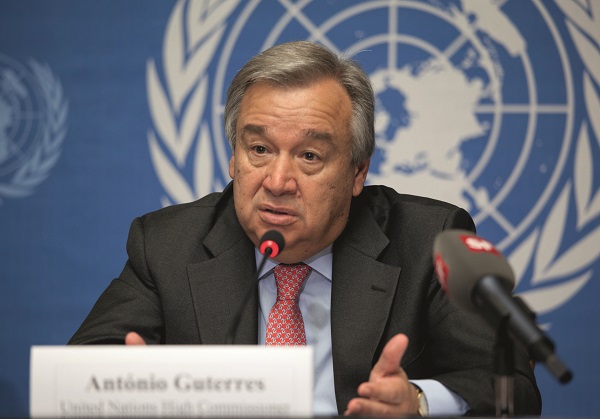
United Nations Secretary-General António Guterres delivered a powerful message to the global community on Monday: Hunger must never be used as a weapon of war.
Speaking via video at a UN conference in Ethiopia, Guterres highlighted the devastating impact of conflict and climate change on food security around the world, calling on governments and international actors to reject the use of starvation as a military tactic.
“Climate change is disrupting harvests, supply chains, and humanitarian aid. Conflict continues to spread hunger from Gaza to Sudan and beyond,” Guterres said.
“Hunger fuels instability and undermines peace. We must never accept hunger as a weapon of war.”
Nowhere is this warning more urgent than in the Gaza Strip, where the humanitarian situation has reached critical levels. After more than 21 months of war, and following a near-total blockade of aid from March to May, Gaza is facing what the UN has called life-threatening hunger.
Despite a recent “tactical pause” announced by Israel to allow humanitarian operations, aid reaching the region still falls far short of the needs of the population. On Sunday, the World Health Organization (WHO) reported that malnutrition has reached alarming levels.
Israel’s government, under Prime Minister Benjamin Netanyahu, has rejected accusations that it is using starvation as a method of warfare. Officials instead blame aid agencies for what they say is a failure to collect and distribute the supplies delivered to Gaza’s border crossings.
Guterres also spotlighted Sudan, describing the country’s civil war as a largely overlooked but massive humanitarian disaster. Since April 2023, a violent power struggle between the Sudanese Armed Forces (led by Abdel Fattah al-Burhan) and the paramilitary Rapid Support Forces (commanded by Mohamed Hamdan Daglo) has torn the nation apart.
According to the UN’s International Organization for Migration (IOM), over seven million people have been displaced and tens of thousands killed in the conflict.
Othman Belbeisi, the IOM’s regional director, called Sudan “the largest humanitarian catastrophe facing our world — and also the least remembered.”
As global temperatures rise and geopolitical tensions flare, hunger is increasingly being weaponized — whether through blockades, forced displacement, or neglected supply chains. The consequences go far beyond nutrition: they destabilize societies, fuel further conflict, and erode the foundations of peace.
The UN is now sounding the alarm, urging the international community not only to increase humanitarian aid but also to protect the right to food as a matter of international law and basic human dignity.
