


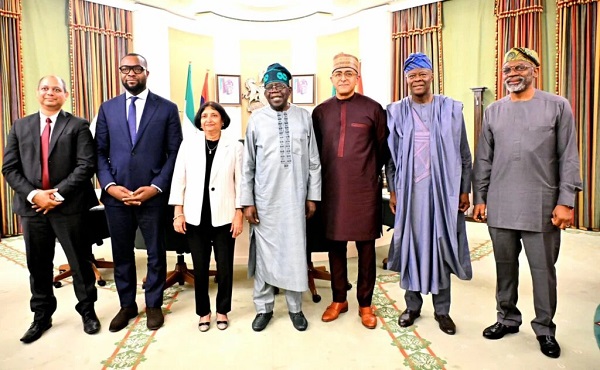
The World Bank Group has announced plans to launch a major digital infrastructure project in partnership with the Nigerian government, aimed at expanding broadband access across the country.
The initiative was disclosed on Wednesday by Anshula Kant, Managing Director and Chief Financial Officer of the World Bank Group, during a courtesy visit to President Bola Tinubu at the Aso Rock Presidential Villa in Abuja.
Kant revealed that digital connectivity will be a key component of the bank’s broader support for Nigeria, which includes investments in agriculture, energy, social protection, health, and education.
“One of the biggest forthcoming projects will be in the digital space, providing digital broadband access across the country,” she said.
Strategic Alignment with Nigeria’s Development Goals
Kant emphasized that the World Bank’s development priorities strongly align with Nigeria’s current agenda, particularly in the areas of youth employment, infrastructure, and human capital development.
“Today, the World Bank Group is on a mission to eradicate poverty on a livable planet. To do this, we must focus on accelerated growth and better jobs for young people,” she said.
“This requires an enabling environment, including access to energy, digital services, quality healthcare and education, and higher agricultural productivity.”
High-Level Attendance
The World Bank delegation included Mayank Goyal (Advisor to the World Bank Group), Taimur Samad (World Bank Country Manager for Nigeria), and Nigeria’s Minister of Finance and Coordinating Minister of the Economy, Wale Edun.
Also present at the meeting were Minister of Communications and Digital Economy, Bosun Tijani, and Femi Gbajabiamila, Chief of Staff to the President.
Kant commended President Tinubu’s administration for what she called “bold macroeconomic reforms”, noting that early signs of improvement are already becoming evident in the economy.
World Bank’s Support for Nigeria
The digital broadband initiative is part of the World Bank’s expanding footprint in Nigeria, which includes:
- Energy access and power sector reforms
- Agricultural and agribusiness development
- Social safety nets and poverty reduction programmes
- Education and healthcare improvements
Kant concluded that sustainable growth must balance investment in physical infrastructure with human capital development, affirming the World Bank’s long-term commitment to both.
