


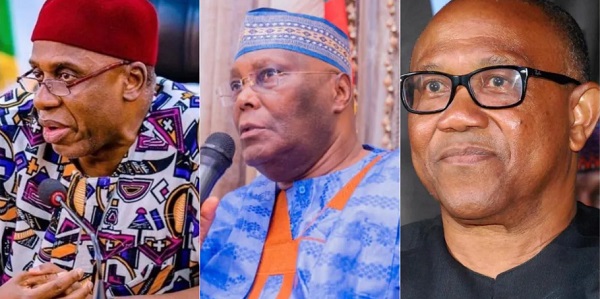
Opposition leaders stepped up pressure on the National Assembly on Thursday, calling for an urgent review of the newly signed Electoral Act 2026, which they argue could undermine transparency ahead of the 2027 general elections.
At a joint press conference in Abuja, senior figures from the African Democratic Congress (ADC) and the New Nigeria Peoples Party (NNPP) accused the ruling All Progressives Congress (APC) of reshaping the electoral framework to its advantage. But the Senate swiftly pushed back, insisting that any concerns must be addressed through established legislative channels.
The amended law, recently signed by President Bola Tinubu, introduces significant changes to Nigeria’s electoral process. While the 2022 Electoral Act allowed political parties to choose candidates through direct primaries, indirect primaries, or consensus arrangements, the new legislation limits parties to only direct primaries and consensus. It also shortens campaign timelines and requires funding for the Independent National Electoral Commission (INEC) to be released six months before elections instead of 12.
Speaking on behalf of the opposition bloc, NNPP National Chairman Ajuji Ahmed described several provisions of the law as “anti-democratic” and warned that their implementation could weaken public trust in elections.
Central to the opposition’s objection is a new clause in Section 60(3), which they say grants broad discretionary powers to presiding officers during the transmission of election results. According to Ahmed, the provision could undermine the electronic transmission system introduced to enhance transparency at polling units.
He cited past statements by former INEC Chairman Prof. Mahmud Yakubu and former INEC Commissioner Festus Okoye, who had maintained that the Bimodal Voter Accreditation System (BVAS) operates largely offline and that network failures do not permanently prevent results from being uploaded once connectivity is restored. Ahmed also pointed to data from the Nigerian Communications Commission indicating widespread network coverage across the country, arguing that concerns about connectivity are overstated.
“The denial of mandatory real-time transmission of results on the basis of network failure is not supported by evidence,” he said, alleging that the changes could open the door to manipulation.
The opposition also criticized the amendment to Section 84 of the Act, which now confines parties to direct primaries and consensus. They argue that the restriction infringes on the constitutional autonomy of political parties to manage their internal affairs. Indirect primaries, they said, remain a legitimate and democratic method for selecting candidates.
Beyond the electoral law itself, opposition leaders raised broader concerns about governance and democratic institutions.
Former Rivers State Governor Rotimi Amaechi, who contested the APC presidential ticket in 2023, said the opposition must focus on strengthening its internal strategy rather than concentrating solely on President Tinubu. Drawing from his experience in government, he suggested that political actors often shift positions on electoral reform depending on whether they are in power.
Labour Party presidential candidate Peter Obi painted a grim picture of the nation’s economy and security situation, lamenting rising poverty, increasing insecurity, and mounting public debt. He argued that the opposition must unite to offer Nigerians a credible alternative ahead of 2027.
Former Vice-President Atiku Abubakar warned that any erosion of democracy in Nigeria could have ripple effects across Africa, given the country’s size and influence on the continent. He urged opposition groups not present at the meeting to join what he described as a broader movement to safeguard democratic principles.
Among those in attendance were ADC National Chairman David Mark, NNPP chieftain Buba Galadima, former Osun State Governor Rauf Aregbesola, Senator Dino Melaye, and former Cross River State Governor Liyel Imoke, among others.
The Senate, however, dismissed calls for an immediate amendment. Senate spokesman Yemi Adaramodu said opposition figures should channel their proposals through lawmakers rather than escalate political tensions publicly.
“If they have concerns, they should present them to their representatives in the National Assembly,” he said, likening the demand for a fresh amendment to reopening a process that had already been concluded.
Senator Orji Uzor Kalu, Chairman of the Senate Committee on the South-East Development Commission, also rejected the agitation, noting that the power to amend the Electoral Act rests solely with the National Assembly. He cautioned opposition leaders against what he described as inflammatory rhetoric capable of destabilising the political environment.
The exchange signals rising political tension as parties begin early positioning ahead of the 2027 general elections. While opposition leaders argue that the Electoral Act 2026 requires urgent revision to protect the integrity of the ballot, the Senate maintains that any changes must follow due legislative process.
With both sides firmly holding their ground, the debate over the electoral framework is emerging as a key battleground in Nigeria’s evolving political landscape.
