


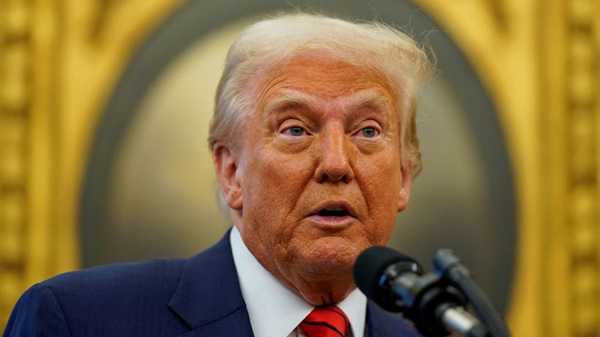
United States President Donald Trump has expressed optimism that the ongoing conflict involving Iran could come to an end soon, despite continued military escalation across the Middle East.
Speaking during a press briefing on Monday, 9 March, Trump said he believed the war would not last much longer, even as hostilities continue between Iranian forces and a coalition led by the United States and Israel.
The conflict began on 28 February after Trump announced the start of what he described as “major combat operations” against Iran. The campaign involved extensive joint airstrikes by U.S. and Israeli forces targeting Iranian military bases, government installations and strategic infrastructure.
Iranian state television later confirmed that the country’s Supreme Leader, Ali Khamenei, was killed in Tehran during the first wave of the attacks. His death marked a significant turning point in the conflict.
On Sunday, Iranian authorities announced that his son, Mojtaba Khamenei, had been appointed as the new Supreme Leader. The decision has generated considerable debate both within Iran and internationally, as Mojtaba Khamenei had not previously held an elected government position.
Despite Trump’s suggestion that the war could conclude soon, hostilities across the region have continued to intensify. Iran has launched multiple waves of missiles and drones in retaliation, targeting Israel, U.S. military bases in the region and several Gulf states allied with Washington.
Meanwhile, Israel has expanded its military campaign beyond Iran. The Israel Defense Forces have increased strikes on positions held by Hezbollah in Lebanon, a militia group backed by Iran that has long been involved in cross-border tensions with Israel.
The escalating hostilities have raised concerns internationally about the possibility of a broader regional war. Analysts warn that continued airstrikes and retaliatory attacks could draw additional countries into the conflict if diplomatic efforts fail to ease tensions.
