


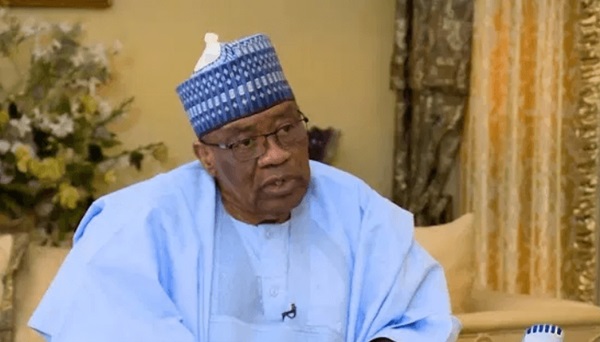
Former Head of State, General Ibrahim Babangida (retd.), has revealed details of the foiled coup allegedly orchestrated by his childhood friend, General Mamman Vatsa, forcing him to make a difficult choice between preserving their longstanding personal bond and protecting the future of the nation.
In excerpts from his autobiography, A Journey of Service, launched on February 20, 2025, Babangida recounts how he first received vague warnings about Vatsa’s alleged plans, which initially surfaced as “a series of rumours.”
In Chapter 10, titled ‘The Challenges of Leadership,’ the former military leader admits that while he initially dismissed the rumours as unfounded jealousy due to the close relationship the two shared since their youth, he eventually sought counsel from fellow officers, including Generals Nasko, Garba Duba, and Wushishi.
Subsequent covert investigations by military and intelligence agencies, Babangida explained, uncovered “incontrovertible evidence” that Vatsa had paid officers to facilitate the coup.
He said, “With our experience in the few months in government and the benefit of hindsight based on previous rumours, I decided the best course of action was to confront the principal suspects. When the rumours gained momentum, I confronted Vatsa after reporting them to senior colleagues like Generals Nasko, Garba Duba, and Wushishi. Nasko intervened and tried to get the truth from Vatsa. Vatsa denied everything, but investigations continued.”
When substantial evidence emerged, the arrests began, revealing that Vatsa had funded several officers, including Lt-Col. Musa Bitiyong, who received N50,000 to aid the plot. Vatsa later admitted to the payment but claimed it was for a farm project for Bitiyong, whose previous involvement in other controversial coup attempts only worsened his case.
The coup’s plans reportedly included bombing the Eko Bridge in Lagos and sabotaging key Air Force assets, with intelligence also revealing a scheme to hijack or shoot down the presidential aircraft.
Babangida recalled the deep sense of betrayal he felt due to their long friendship. He said, “I felt a deep personal sense of betrayal,” reflecting on their decades-long bond that began in Minna.
Once the military tribunal reviewed the case, it was clear that the coup plotters, including Vatsa, had to be executed. Babangida justified the decision, saying, “It was a personal loss of a childhood friend, but it was necessary to preserve Nigeria’s stability. They had planned a bloody coup that would have plunged the country into darkness. I had to choose between saving a friend’s life and securing the nation’s future.”
Describing the emotional toll of the decision, Babangida confessed to being “somewhat depressed” over Vatsa’s death but emphasized that national security outweighed personal relationships. He stated, “Vatsa’s death was a personal loss. As a human being, I was somewhat depressed to watch him die in such circumstances. However, the nation’s stability and the cohesion of the armed forces were far too important to sacrifice for personal considerations. The law, order, and national security took precedence.”
Babangida also noted that members of Vatsa’s family and political groups later attempted to politicize the incident, but he remained firm in his belief that the execution was crucial for “the cohesion of the armed forces” and the nation as a whole.
Reflecting on Vatsa’s career, Babangida mentioned that some senior officers were dissatisfied with Vatsa’s appointment as Minister of the Federal Capital Territory, partly because he played no role in ousting General Buhari. Despite this, Babangida said he remained loyal to their friendship and made efforts to accommodate Vatsa’s excesses and boisterous nature.
In the official launch of his autobiography and the fundraiser for the IBB Presidential Library in Abuja, Babangida also expressed regret over the annulment of the June 12, 1993, presidential election, acknowledging that the Social Democratic Party’s candidate, Moshood Abiola, had won the election. However, he blamed “forces” led by former Head of State, General Sani Abacha, for the annulment.
In Chapter 12, titled ‘Transition to Civil Rule and the June 12 Saga,’ Babangida wrote, “I remember saying, ‘These nefarious ‘inside’ forces opposed to the elections have outflanked me!’ I would later find out that these forces, led by General Sani Abacha, were responsible for the annulment.”
He continued, “At that moment, I knew I was caught between ‘the devil and the deep blue sea!’ From then on, the June 12 elections took on a painful twist for which, regrettably, I took responsibility.”
Babangida added that the annulment was partly to prevent the potential assassination of Abiola, which could have led to a civil war. He wrote, “While I accept that the denial of his mandate amounted to a subversion of the will of the Nigerian people, I was terrified that if Abiola were killed, it would spark a civil war. Having lived through one civil war, with all its horrors, I wasn’t prepared to witness another.”
