


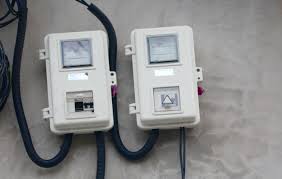
Electricity distribution companies (DisCos) have expressed strong reservations over the directive by the Minister of Power, Adebayo Adelabu, that prepaid electricity meters must be provided free of charge to all categories of consumers.
Industry operators, who spoke anonymously due to the sensitivity of the issue, said the minister’s announcement failed to reflect consultations with key stakeholders, including DisCos, meter installers, and manufacturers. They described the directive as largely political and impractical, warning that it could worsen existing challenges in the power sector.
Last Thursday, the Federal Government barred DisCos and meter installers from charging customers for prepaid meters, warning that any official found demanding payment would face prosecution. Adelabu issued the directive during an inspection of newly imported smart meters at APM Terminals, Apapa, Lagos.
The minister explained that the meters were procured under the World Bank–supported Distribution Sector Recovery Programme and must be installed at no cost to consumers. He stressed that the directive applies to all customers, irrespective of their electricity tariff band, adding that free metering would enhance billing efficiency and revenue collection across the sector.
However, DisCo officials countered that the so-called free meters would ultimately be paid for by the distribution companies over a 10-year period, questioning why the government expects them to absorb installation and procurement costs.
According to the operators, meter installers are independent service providers, not employees of the DisCos, and must be paid for their services by someone. They argued that forcing DisCos to shoulder such capital expenditure without tariff adjustments would further strain their already fragile finances.
“When DisCos are required to fund capital expenditure, it must be recognised as allowable capex and reflected in tariffs. Otherwise, it damages their balance sheets,” one official said.
Another operator noted that DisCos were stripped of direct responsibility for metering during previous reforms, adding that the current directive ignores that reality. “If the government insists that consumers must not pay, then it must clearly state who will pay the installers. DisCos are not responsible for meter installation under the current framework,” the source said.
Several operators described Adelabu’s comments as populist, warning that failure to address cost recovery could lead to mounting debt and operational inefficiencies in the sector.
They also raised concerns that the directive could undermine the Meter Asset Providers (MAP) scheme, which allows customers to purchase meters directly and recoup costs through energy credits. According to them, customers are already rejecting the MAP option after hearing that meters are now “free for all.”
“The reality is that these free meters cannot cover the entire metering gap. MAP has been running alongside government interventions for years, but this announcement has created confusion,” an operator said. “People now believe there are enough meters for everyone, which is not true.”
The DisCos urged the government to clarify the scope of the free meter programme, including the areas and categories of customers that will benefit, to avoid crippling the MAP scheme and harming local meter manufacturers.
They further appealed to both the government and electricity regulators to prioritise transparency and cost recovery in policy decisions, warning that unclear directives could fuel customer agitation and disrupt operations.
“We agree that consumers should not pay directly, but the government must be clear on who bears the cost,” one operator said. “Every cost must be accounted for. Without cost recovery, the system will only deteriorate further.”
