


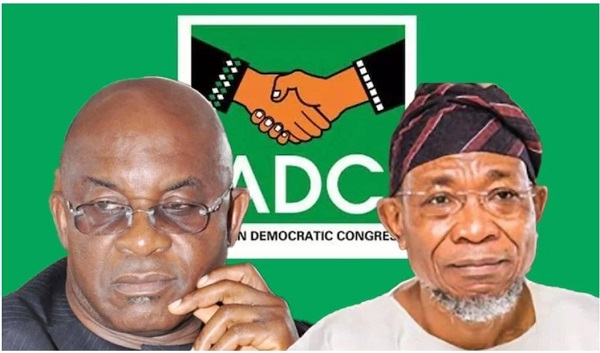
The African Democratic Congress (ADC), the Peoples Democratic Party (PDP), and former Anambra State Governor Peter Obi have criticised the decision of the Independent National Electoral Commission (INEC) to de-recognise key leaders of the ADC.
INEC announced on Wednesday that it had removed the names of Senator David Mark and Rauf Aregbesola from its official portal as the party’s National Chairman and National Secretary respectively. The commission said the move was in compliance with a court order directing all parties to maintain the status quo pending the determination of an ongoing suit challenging the ADC leadership.
In a statement issued by its National Commissioner and Chairman of the Information and Voter Education Committee, Mohammed Haruna, INEC explained that it had received conflicting legal communications from rival factions within the party, prompting its decision to suspend recognition of all sides.
The commission also declined to recognise Nafiu Bala Gombe, who is seeking to be declared National Chairman through the courts, stating that it would refrain from engaging with any faction until the matter is resolved.
Reacting, ADC spokesman Bolaji Abdullahi rejected INEC’s interpretation of the court ruling, arguing that maintaining the “status quo” should mean retaining the leadership structure in place before the legal dispute began.
He accused the ruling All Progressives Congress (APC) of attempting to destabilise the opposition, warning that the party would resist any perceived interference through legal means.
Similarly, PDP spokesman Ini Ememobong described the development as a threat to democracy, alleging that the government was undermining opposition parties to weaken credible political competition.
The National Coordinator of the Obidient Movement, Yunusa Tanko, also condemned the decision, warning it could trigger a political crisis if the electoral body is seen as partisan.
“This is completely unacceptable,” he said, cautioning that the move could have “catastrophic consequences” for the country if not addressed.
INEC, however, maintained that its actions were guided strictly by a Court of Appeal ruling delivered in March 2026, which directed all parties to preserve the status quo and avoid actions that could prejudice ongoing proceedings.
The commission added that it would suspend all dealings with the ADC, including monitoring party activities, until the Federal High Court delivers a final judgment.
While opposition figures criticised the move, the faction aligned with Gombe welcomed INEC’s decision, describing it as lawful and consistent with the appellate court’s directive.
The dispute stems from a leadership crisis within the ADC following the emergence of a new National Working Committee led by Mark in 2025, which was contested by Gombe, who claims he should have assumed leadership after the resignation of the previous chairman.
With legal battles ongoing and political tensions rising, the controversy underscores deepening divisions within Nigeria’s opposition landscape ahead of future electoral contests.
