


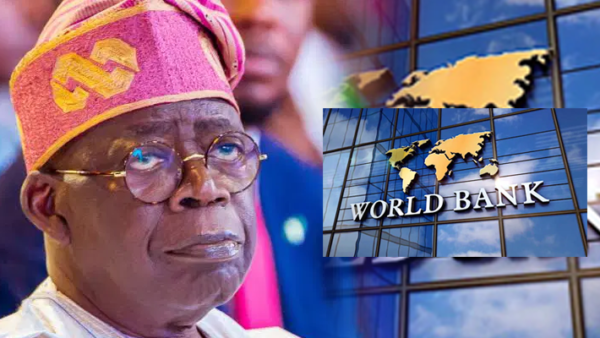
The Nigerian Government has cancelled $717.7 million (£530 million) in undisbursed World Bank financing earmarked for the country’s struggling electricity sector, bringing an early end to a major $1.52 billion power recovery programme.
According to official World Bank restructuring documents reviewed on Monday, the cancellation followed a formal request by the Nigerian Government and a joint agreement between both parties to discontinue the Power Sector Recovery Performance-Based Operation.
The move comes as Africa’s largest economy continues to grapple with severe electricity supply problems, mounting tariff shortfalls, worsening fiscal pressures and long-standing operational challenges across the power industry.
The World Bank confirmed that the cancelled amount represented the entire remaining balance under the programme.
“The restructuring will result in the cancellation of the entire undisbursed balance in the amount of $717.7m equivalent, and no further disbursements will be made,” the bank stated in its report.
Zebra News understands that the programme’s closing date has also been brought forward from 30 June 2027 to 31 May 2026, effectively terminating the initiative more than a year ahead of schedule.
The original Power Sector Recovery Programme was approved in June 2020 with financing of approximately $752.5 million. It was designed to improve the reliability of electricity supply, strengthen the financial sustainability of the sector and improve accountability among key institutions involved in power generation and distribution.
In June 2023, the World Bank approved an additional financing package worth around $763.5 million to deepen reforms and consolidate earlier gains.
Combined, the two facilities totalled roughly $1.52 billion.
While the initial phase of the programme reportedly achieved significant progress and largely disbursed its allocated funds, the additional financing arrangement struggled to meet crucial reform conditions.
According to the World Bank, Nigeria’s electricity sector remains burdened by weak distribution networks, transmission bottlenecks, underutilised generation capacity and chronic financial instability.
The report highlighted persistent technical, commercial and collection losses across electricity distribution companies, alongside inadequate cost recovery mechanisms that continue to widen the gap between revenues and operational costs.
“These constraints have created recurrent financing gaps, most notably in the form of tariff shortfalls, which generate liquidity pressures across the value chain,” the World Bank said.
Zebra News gathered that tariff shortfalls initially dropped by 71 per cent between 2019 and 2022, falling from ₦581 billion to ₦166 billion during the implementation of the original programme.
However, the gains proved short-lived.
Following the liberalisation of Nigeria’s foreign exchange market in June 2023, the naira suffered a sharp depreciation, significantly increasing the cost of natural gas used to generate electricity. More than 70 per cent of Nigeria’s power supply depends on gas-fired plants priced in US dollars.
Despite rising production costs, electricity tariffs remained largely frozen for most consumers, apart from Band A customers whose tariffs were adjusted in April 2024.
As a result, annual tariff shortfalls surged dramatically from ₦140 billion in 2022 to an estimated ₦1.9 trillion in both 2024 and 2025, placing enormous pressure on government finances.
The World Bank said Nigeria failed to achieve several critical reform indicators tied to the additional financing package, including establishing a credible and sustainable plan to address mounting tariff deficits.
“Recent financing plans have not fully identified sufficient sources of funding to cover tariff shortfalls, nor established a credible trajectory for their reduction,” the report noted.
Implementation delays also hampered progress, particularly within the Transmission Company of Nigeria, alongside verification challenges involving key institutions in the power sector.
Financial records showed that only $41.24 million out of a $449 million International Bank for Reconstruction and Development allocation was disbursed, representing just over nine per cent utilisation.
Overall, the World Bank classified implementation progress under the additional financing package as “Moderately Unsatisfactory”.
The bank concluded that the programme’s structure had become increasingly incompatible with Nigeria’s changing economic and operational realities.
“Taken together, these developments point to a misalignment between the design of the operation and the evolving implementation context,” the report stated.
The development comes amid growing concerns within Nigeria over delays linked to international financing approvals.
Earlier this month, Nigeria’s Accountant-General of the Federation, Dr Shamseldeen Ogunjimi, warned that the country could reject future World Bank loan facilities if approval and disbursement processes continue to face lengthy delays.
Speaking during a meeting with World Bank officials in Abuja, Ogunjimi stressed that Nigeria expected quicker processing timelines given that the facilities are loans rather than grants.
“If approvals take more than six months, the Nigerian Government may no longer honour such arrangements,” he warned.
Despite the cancellation, Nigeria remains one of the World Bank’s largest borrowers through the International Development Association. Recent financial statements showed the country’s exposure stood at $18.5 billion as of March 2026, making it the institution’s third-largest borrower after Bangladesh and Pakistan.
Zebra News understands that Nigeria’s continued reliance on concessional financing reflects the country’s ongoing fiscal challenges and the urgent need for sustained infrastructure investment, particularly within the troubled electricity sector.
