


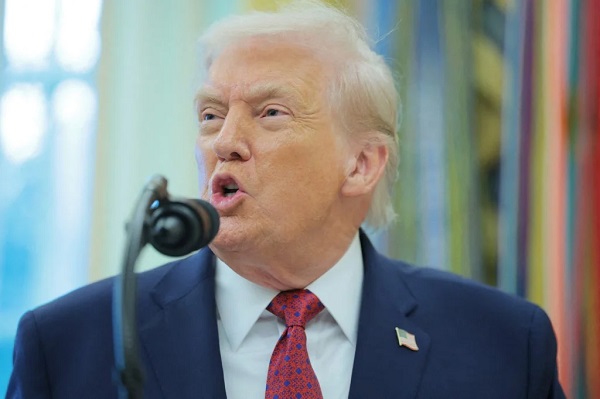
US President Donald Trump has strongly defended the newly signed agreement between the United States and Iran, dismissing critics who argue that Washington conceded too much in exchange for peace.
Speaking after the signing of a memorandum of understanding with Iranian President Masoud Pezeshkian, Trump described opponents of the deal as “fools” and insisted that the agreement was already delivering economic and geopolitical benefits.
The agreement is designed to end hostilities between the United States and Iran, reopen the strategically important Strait of Hormuz and establish a framework for negotiations on Iran’s nuclear programme over the next 60 days.
Defending the accord, Trump pointed to improving market conditions, arguing that investor confidence had risen while concerns over global energy supplies had eased.
According to the framework agreement, both countries have committed to ending military operations and pursuing a broader settlement through future negotiations. The reopening of the Strait of Hormuz is viewed as one of the most significant outcomes of the deal, given the waterway’s importance to global oil and gas shipments.
The memorandum also provides for the easing of some restrictions on Iran’s oil exports and sets out a pathway for discussions on sanctions relief, frozen assets and wider economic cooperation. Reports indicate that a reconstruction initiative valued at hundreds of billions of dollars is among the proposals being considered as part of longer-term negotiations.
Zebra News understands that the agreement was formally signed during events linked to the G7 summit in France, with both Trump and Pezeshkian confirming their approval of the framework.
French President Emmanuel Macron welcomed the agreement and praised efforts to reduce tensions in the Middle East, while Iranian officials described the accord as a historic opportunity to move towards stability and economic recovery.
Despite the diplomatic breakthrough, the deal has faced criticism from some American politicians and foreign policy commentators who argue that it does not place sufficient restrictions on Iran’s nuclear ambitions.
Among the critics is Bill Cassidy, who reportedly described the agreement as a major foreign policy error and questioned whether Iran had made adequate concessions in return for economic relief.
Iranian officials have also maintained that the country’s ballistic missile programme remains outside the scope of future negotiations, insisting that its defence capabilities are non-negotiable.
Attention is now shifting to upcoming talks in Switzerland, where negotiators will seek to transform the initial framework into a comprehensive long-term agreement covering nuclear issues, regional security and economic cooperation.
Oil markets responded positively to the announcement, with prices easing amid expectations that the reopening of the Strait of Hormuz will help stabilise global energy supplies and reduce fears of further disruption.
Zebra News reports that while significant challenges remain, the agreement represents the most substantial diplomatic engagement between Washington and Tehran in years and could reshape the political and economic landscape of the Middle East if successfully implemented.
